


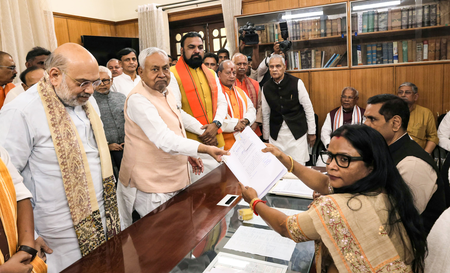
As Bihar gears up for the Rajya Sabha elections, a new political era may dawn after Chief Minister Nitish Kumar’s long-standing tenure. Kumar, who secured his 10th term as CM in November 2025, is set to transition to national politics by joining the Rajya Sabha. The upcoming polls on March 16 will witness state legislators electing representatives to the Upper House.
With 37 Rajya Sabha seats across 10 states up for grabs this year, Bihar faces the vacancy of five seats. Given the NDA’s stronghold in the 243-member Bihar Assembly, securing multiple seats is anticipated to be a smooth process. Nitish Kumar’s move to the Rajya Sabha signifies a strategic shift from state-level governance to a national platform.
The spotlight now turns to Nitish Kumar’s son, Nishant Kumar, hinting at a potential succession plan within the JD-U. While Nishant has been relatively inactive in politics, recent engagements with party members fuel speculations of his gradual foray into a more prominent political role. Party insiders suggest a looming leadership transition within the JD-U.
Post Nitish Kumar’s exit as CM, the JD-U faces the twin challenge of ensuring political stability in Bihar and grooming its next leadership cadre. The entry of Nishant Kumar into politics could be pivotal in shaping the party’s future trajectory. The BJP, being a key player in the NDA in Bihar, closely monitors the aftermath of Nitish Kumar’s Rajya Sabha entry.
Nitish Kumar’s move to the Rajya Sabha may trigger a power shift within the alliance, with the BJP closely observing developments within the JD-U. Speculations surrounding Nishant Kumar’s political aspirations are under scrutiny, as any generational shift within the JD-U could impact leadership dynamics within the NDA in Bihar.
