


Northeast India has become a vital juncture where India’s ‘Act East Policy’ aligns with Japan’s ‘Free and Open Indo-Pacific’ vision, fostering joint actions to counter regional influences through enhanced maritime and land connections. The Quadrilateral Security Dialogue (Quad), involving India, Japan, the US, and Australia, supports intelligence sharing, technology access, and infrastructure financing options, with both countries steering clear of China’s Belt and Road Initiative. Japan’s significant investments in Northeast India, totaling over Rs 23,529 crore across 20 projects by early 2026, focus on boosting connectivity and regional development.
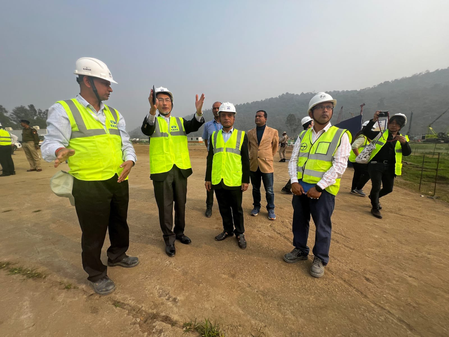
Placing connectivity at the core of its engagement, Japan has funded various projects in Northeast India, including the North East Road Network Connectivity Improvement Project and the Dhubri-Phulbari Bridge, linking Assam and Meghalaya. These initiatives aim to link Northeast India to the Bay of Bengal and Indian Ocean, unlocking trade and socio-economic opportunities. Japan’s Official Development Assistance (ODA) exceeding $2 billion by 2021 addresses infrastructure gaps in the region, accelerating India’s regional integration and positioning Japan as a reliable partner in sustainable development.
Japan’s investments in Northeast India not only diversify its security strategy beyond reliance on the US but also bolster India’s regional leadership. Collaborative efforts between India and Japan, such as the Supply Chain Resilience Initiative (SCRI) and Mineral Security Partnership, prioritize critical minerals, pharmaceuticals, and ICT to promote a rules-based order and stability amid East Asian tensions. The expanding bilateral cooperation between the two countries, focusing on Northeast corridors and defense technology co-production, aims to enhance ties and drive shared prosperity in the Indo-Pacific region.
