


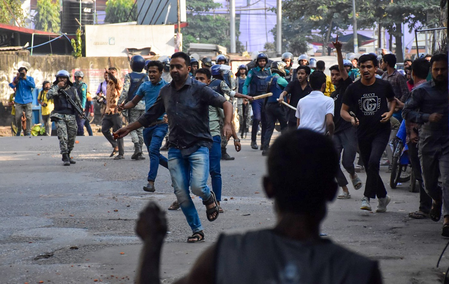
Operation ‘Devil Hunt’ in Bangladesh, a significant security crackdown, has led to numerous arrests across Dhaka and other areas. However, concerns persist as the operation has not effectively tackled the root causes of escalating violence before the upcoming February 12 election. Despite authorities emphasizing the operation’s importance in restoring law and order before the national elections, citizens and rights groups remain worried about ongoing violence, unaddressed weapon recovery, and escaped convicts still at large.
The operation, relaunched after an incident involving the shooting of a campaigner on December 12, has entered its second phase in 2026 after commencing in 2025. Initially initiated under the interim government, the operation aimed to combat increasing crime rates, retrieve stolen weapons, and capture fugitives following a student-led uprising in 2024 that led to a change in government.
Reports indicate that over 1,300 individuals were arrested in the initial days of the operation, with a focus on members of the Awami League and its affiliated groups. Recent updates mention the Dhaka Metropolitan Police’s arrest of 98 individuals as part of ‘Operation Devil Hunt Phase-2’, targeting high-crime areas within the capital. Additionally, the Bangladesh Coast Guard apprehended a suspect and seized firearms, explosives, and drugs during an operation in Bhola district.
Despite these efforts, concerns persist over the large number of firearms still missing from the 2024 uprising loot, as well as the unresolved cases of escaped inmates and the high number of murder filings in the country. The operation’s reactive nature has raised doubts among analysts, who fear that ongoing violence could impact voter turnout and democratic engagement. Critics argue that the operation may have political motivations, while citizens remain anxious about the lingering violence and insecurity.
As the elections draw near, the success of Operation Devil Hunt will be measured not just by statistics but by its ability to instill genuine safety and trust among the populace.
