


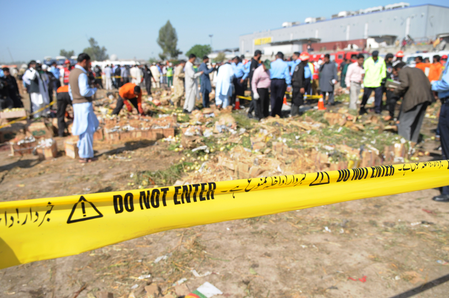
Within 24 hours of the deadly blast in Islamabad that claimed over 30 lives and left 160 injured, Pakistan pointed fingers at Afghanistan and India. However, Pakistan did not acknowledge its own role in nurturing terror groups that have now turned against it. Indian agencies suspect the involvement of Tehreek-e-Taliban Pakistan (TTP) or Islamic State Khorasan Province (ISKP) in the attack, although neither group has claimed responsibility.
The attack, targeting worshippers at Khadja Tul Kubra Mosque in Islamabad, particularly aimed at Shias, indicating possible links to TTP or ISKP. Questions arise as to why Pakistan hastily blamed India and Afghanistan without addressing its intelligence failures. The Pakistan establishment, led by Field Marshal Asim Munir, has faced embarrassment in recent months, especially after clashes with various groups including the Balochistan Liberation Army (BLA) and the TTP.
The ISKP’s alleged involvement in the attack could signal a setback for Pakistan’s intelligence strategy. The ISKP, distrustful of the Pakistani establishment, shares a goal with TTP in wanting Sharia law in Pakistan. The ISI’s attempt to align ISKP with Lashkar-e-Taiba backfired, revealing internal rifts and unmet expectations. Pakistan’s Defence Minister, Khwaja Asif, swiftly blamed the Afghan Taliban and India for the attack, prompting analysts to view it as a diversion tactic from internal issues.
The knee-jerk reactions by Pakistani officials to blame external entities like India and the Taliban are seen as attempts to shift focus from domestic challenges. By allowing radical activities and unrest in Pakistan-occupied Kashmir, Pakistan risks neglecting its internal security, as evidenced by the recent blast in a populated area.
