


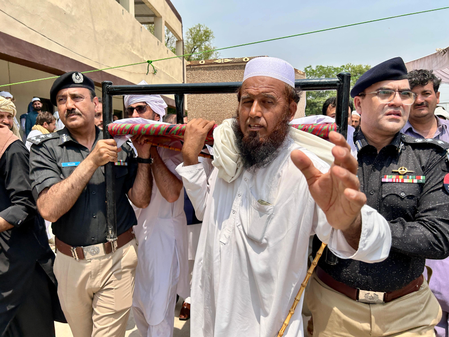
Pakistan is grappling with a deteriorating security situation marked by the resurgence of the Tehreek-e-Taliban Pakistan (TTP), a deepening Baloch insurgency, and escalating tensions with Afghanistan. The country has witnessed a surge in militant violence, cross-border confrontations, and increased operational capabilities of armed groups, leading to expectations of instability and violence in the near future.
According to data from the South Asia Terrorism Portal (SATP) cited by Eurasia Review, Pakistan recorded 57 terrorism-related incidents in just 17 days in May, resulting in 200 fatalities, including security forces, militants, and civilians. Khyber Pakhtunkhwa province, heavily impacted by the TTP resurgence, saw the highest number of fatalities in 2025 since 2009, with 2,359 deaths in 545 incidents, marking a significant increase from the previous year.
Following Khyber Pakhtunkhwa, Balochistan reported the second-highest number of militancy-related fatalities in Pakistan. The province recorded 1,534 deaths in 482 incidents in 2025, showing a sharp increase from the previous year. The deteriorating security situation in Balochistan is attributed to attacks on security forces, frustration among Baloch nationalist groups, and neglect of the population’s basic needs by Pakistan security agencies and their proxies.
The Afghanistan-Pakistan border region has experienced attacks by infiltrating militants on Pakistani security forces’ checkposts and exchanges of fire between the security forces of both countries. Amid strained ties with neighboring countries, Pakistan ranked first on the Global Terrorism Index in 2025 for the first time, with terrorism-related deaths reaching their highest level since 2013, recording 1,139 fatalities and 1,045 incidents in 2023.
