


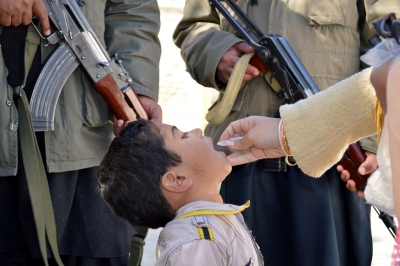
Pakistan continues to face challenges in eradicating polio despite thirty years of aggressive campaigns, as reported by The Express Tribune’s T-Magazine. Since the launch of the anti-polio campaign in 1994, the country has documented 14,206 confirmed polio cases, highlighting ongoing issues with public mistrust and logistical gaps. The absence of a government-run system for treating and integrating children disabled by polio has led to the emergence of an invisible population of survivors in the country.
According to data from the National Emergency Operations Centre (NEOC), Pakistan saw a significant decline in polio cases after reporting 2,635 cases in 1994. However, a resurgence occurred in 2025, with 30 cases reported nationwide. The worst-affected province, Khyber-Pakhtunkhwa (K-P), recorded 19 cases, while Sindh reported nine cases, and Punjab and Gilgit-Baltistan (G-B) each reported one case. The majority of cases in K-P originated from various regions within the province.
Despite extensive mass vaccination efforts, polio remains a public health concern in Pakistan due to deep-rooted mistrust and resistance to immunization. The country’s eradication endeavors face challenges from misinformation, political interference, and security issues, transforming polio vaccination into a contentious issue. The erosion of trust, security threats, communication weaknesses, and inadequate environmental surveillance contribute to the persistence of the virus in sewage samples across multiple provinces.
