


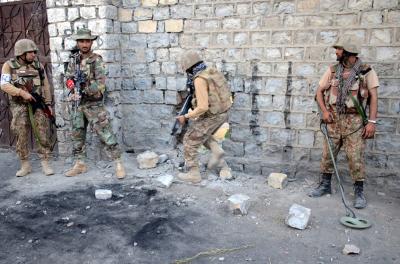
While global terrorism deaths decreased by 28% and attacks by nearly 22%, Pakistan stood out by leading the Global Terrorism Index 2026 with 1,139 terrorism-related deaths last year. According to a report, violence in Pakistan has become a grim norm, indicating a worsening security situation for the sixth consecutive year.
The report highlighted a concerning trend where terrorism-related deaths in Pakistan have increased annually for six years, with the largest year-on-year jump in a decade. The number of attacks more than doubled from 517 in 2023 to 1,099 in 2024, showing a slight decline in 2025 but still at historically high levels.
Experts point out that Khyber Pakhtunkhwa and Balochistan remain the focal points of violence, contributing to over 74% of attacks and 67% of deaths in 2025. These regions, historically neglected in terms of governance and development, continue to bear the brunt of internal conflict in Pakistan.
Pakistan’s counterterrorism approach heavily relies on kinetic actions like raids and targeted strikes, lacking a robust non-kinetic strategy to counter extremism effectively. The absence of a credible terrorism database poses a significant challenge, hindering transparent reporting and accountability in the country.
To achieve lasting peace, experts emphasize the need for Pakistan to address deeper issues beyond military measures. This includes tackling ideological militancy, cross-border sanctuaries, political instability, and governance deficiencies through political clarity, civilian governance in conflict zones, regional diplomacy, police reforms, intelligence sharing, and judicial reforms.
