


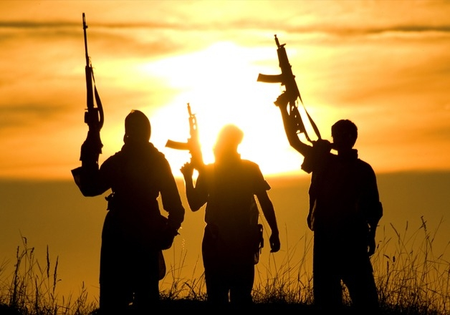
After suffering losses at the hands of the Balochistan Liberation Army (BLA), Pakistani security forces encountered a significant blow from the Tehreek-e-Taliban Pakistan (TTP), resulting in the deaths of eighteen personnel and numerous injuries in Khyber Pakhtunkhwa (KP). The failed strategy of the Pakistan establishment is evident as the TTP’s dominance grows despite efforts involving Lashkar-e-Tayiba and Islamic State Khorasan Province (ISKP) operatives. The TTP’s recent attacks in the Bajaur district, including gun battles and explosions, have caught security forces off guard.
The TTP’s strength, supported by locals, poses a challenge for security forces and their allies. In Balochistan, similar issues persist with the BLA gaining strength and even employing female fighters against Pakistani forces. Locals in Balochistan are voluntarily joining the BLA, reflecting their discontent with the establishment’s policies. The lack of local support hampers efforts by Lashkar-e-Tayiba and ISKP to combat both the TTP and BLA, who have extensively studied and mapped the regions, giving them an advantage.
The involvement of ISKP in the conflict, driven by ambitions in Afghanistan, has not yielded the desired results. Field Marshal Asim Munir’s decisions, post-Operation Sindoor, have led to a series of failed attempts against various militant groups. The demoralization within the security forces facing the TTP and BLA indicates a challenging situation ahead, with fighters withdrawing due to mounting losses.
