


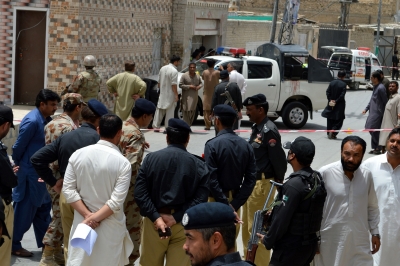
Pakistan’s approach in Balochistan, marked by the use of proxy militias, enforced disappearances, and resource exploitation without local benefits, has worsened the insurgency instead of curbing it. A report highlighted that the region has seen a surge in militant attacks, indicating a deteriorating security situation.
The report emphasized that large parts of Balochistan, including challenging terrains like Awaran and Kohlu, are effectively beyond the control of the Pakistani state. The security environment has deteriorated to the extent that the Pakistan Army rarely operates in these areas, with security forces mostly confined to their bases.
China’s involvement in conflict-ridden Balochistan is diminishing, with security risks leading to the closure of major projects like the China-Pakistan Economic Corridor (CPEC) operations in Gwadar. Recent incidents, such as the attack in Ziarat district, where police personnel were killed and abducted, further underscore the security challenges faced in the region.
The Baloch Liberation Army (BLA) and Tehreek-e-Taliban Pakistan (TTP) are blamed by the Pakistani military for the attacks, but local populations and activists allege involvement of Pakistan-backed death squads. This has fueled tensions and raised concerns about the military’s counter-insurgency operations in Balochistan.
