


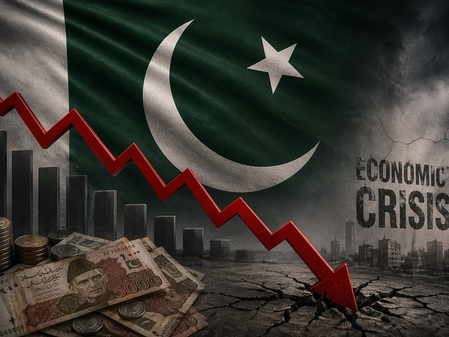
Pakistan’s economic stability is under scrutiny amidst changing geopolitical and financial landscapes, despite its global peace advocacy. Recent events have revealed the nation’s reliance on external aid, with the UAE withdrawing $3.5 billion in deposits, straining Pakistan’s foreign reserves.
The financial strain escalated with an impending $1.3 billion Eurobond repayment, raising concerns about Pakistan’s liquidity. Saudi Arabia intervened by depositing $3 billion to stabilize reserves and support Pakistan’s IMF-backed Extended Fund Facility program, highlighting the country’s financial vulnerability.
While Saudi assistance provided temporary relief, Pakistan’s economic resilience faces renewed scrutiny. Despite some fiscal improvements, structural weaknesses persist, with heavy taxation and high energy costs burdening citizens. The economy remains trapped in a low-growth cycle due to high interest rates and limited export competitiveness.
A recent current account surplus, mainly from import controls rather than sustainable export growth, underscores Pakistan’s fragile external position. With a significant portion of reserves from “friendly” nations and public debt exceeding 70% of GDP, Pakistan faces challenges in managing its financial obligations effectively.
