


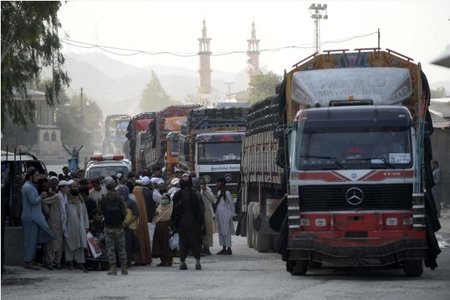
Pakistan’s exports to Afghanistan saw a significant decline in the first seven months of the current fiscal year. Official data from the State Bank of Pakistan revealed that exports to Afghanistan from Pakistan decreased by more than half compared to the same period last year, plummeting from over $550 million to nearly $230 million.
The reduction in exports is attributed to the closure of border crossings between Pakistan and Afghanistan since October last year. This closure, following clashes between Pakistani forces and the Taliban, has halted bilateral trade between the two nations. Despite multiple rounds of talks, the border crossings remain shut, exacerbating the trade disruptions.
The Taliban has advised traders and pharmaceutical importers to explore alternative trade routes and diversify their supply sources to mitigate shortages in local markets. Emphasizing the importance of reducing reliance on a single transit corridor, Taliban officials have urged businesses to consider regional partnerships for a stable supply of essential goods.
Khyber Pakhtunkhwa province in Pakistan has also suffered revenue losses due to the continued closure of the Pakistan-Afghanistan border. The province witnessed a significant decline in revenue, prompting the provincial government to seek intervention from the federal government to address the economic repercussions of the border disruptions.
Efforts to recover from the revenue losses have been hindered by the suspended cross-border trade. Exporters and traders are facing challenges as their consignments and payments are stranded across the border, leading to difficulties in meeting statutory obligations. The prolonged border disruption has not only impacted revenue but has also caused economic and employment consequences for the region.
