


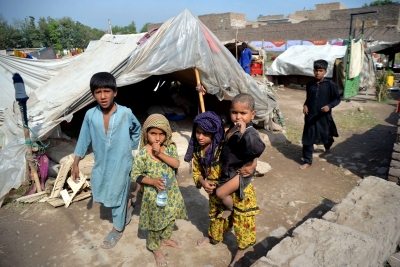
Pakistan’s poverty line, set at 8,484 Pakistani rupees monthly income, has pushed 70 million people, or 28.9% of the population, below the threshold, marking the highest rate in 11 years. This figure is significantly higher than the 21.9% recorded in the previous survey in 2018-19, according to a recent report by the Afghanistan-based news agency Khaama Press.
The official poverty line in Pakistan, calculated at PKR 8,484, equates to $3.50 per day, falling well below the World Bank’s lower-middle-income line of $4.20 per day. Recent World Bank data from June 2025 revealed that 44.7% of Pakistanis are now below the $4.20 line, up from 39.8% under the previous $3.65 measure.
The report highlighted Pakistan’s economic data release pattern, suggesting that the country tends to disclose its most uncomfortable statistics quietly and belatedly. It also pointed out that Islamabad’s spending priorities indicate that citizens’ hardships are not given top priority in budget allocations.
Budget documents indicated a significant surge in military spending in Pakistan, amounting to about 2.08% of GDP, the highest allocation in the country’s history, totaling approximately $10.8 billion. The core defense spending surpasses three and a half times the allocation for supporting the poorest households, escalating to nearly five times when including pensions and development programs.
Pakistan’s economy faces challenges due to a limited tax base, heavy reliance on imports, leading to recurrent balance-of-payments crises, necessitating frequent International Monetary Fund (IMF) bailouts. Another recent report highlighted Pakistan’s heavy reliance on Gulf financing, particularly from Saudi Arabia, which increases vulnerability to compromises in foreign policy decisions.
While policy restrictions and reduced demand have lowered imports in Pakistan, easing immediate pressure on foreign exchange reserves, this situation is likely to exacerbate domestic shortages, drive up inflation, and impede economic growth.
