


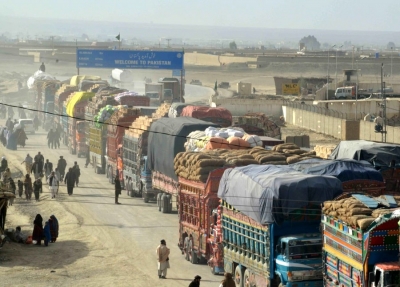
Pakistan’s Punjab province is experiencing a significant economic downturn due to prolonged border closures with Afghanistan, resulting in monthly losses exceeding Pakistani rupees 80 billion. The Lahore Chamber of Commerce and Industry (LCCI) highlighted that the continued shutdown of trade routes has severely impacted bilateral trade, particularly affecting sectors like cement and agricultural chemicals.
LCCI President Faheem-ur-Rehman Saigol emphasized that since the October 2025 border clashes between Pakistan and Afghanistan, major trade routes have been shut down, disrupting cross-border trade. The closure has not only harmed the economies of both nations but has also endangered the livelihoods of numerous traders on both sides of the border.
According to reports from LCCI, approximately 3,000 traders are currently stranded due to the border closures, comprising around 1,200 Pakistani and 1,800 Afghan traders. The situation has led to substantial financial losses as perishable goods like fresh fruits and dry fruits from Afghanistan are decaying in trucks at border points.
Saigol underscored the heavy reliance of Pakistan’s agricultural and industrial exports on the Afghan border, which also acts as a vital transit route to Central Asian countries. The trade suspension has escalated economic pressures, causing declining incomes, rising inflation, and growing concerns among the public and investors.
In Balochistan’s Turbat, residents engaged in border trade staged a protest against the closure of the Abdoi border crossing with Afghanistan, denouncing the Pakistani government’s actions for depriving them of their primary income source. The protesters described the closures as an “economic blockade,” emphasizing the adverse economic impact on the region where cross-border trading of fuel and goods is a major source of revenue.
