


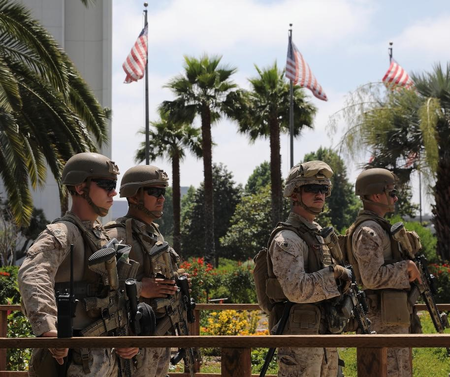
The Pentagon is making preparations to send thousands of troops from the Army’s 82nd Airborne Division to the Middle East, hinting at a potential escalation in the Iran conflict. Reports suggest that around 3,000 troops from this division will be deployed, in addition to the Marines already en route to the region. While there is no decision yet on sending US troops into Iran, this military buildup raises the prospect of deeper American involvement in the conflict, as per Politico.
Parts of the 82nd Airborne, including command elements and ground forces, are expected to be deployed, according to CBS News. An initial contingent of fewer than 1,500 troops is anticipated. The 82nd Airborne is known for its rapid-response capabilities, with the ability to deploy globally within hours. Its “Immediate Response Force” can be mobilized within 18 hours, providing the White House with flexible military options, as reported by The New York Times.
As the conflict enters its fourth week, the US has primarily relied on an air campaign utilizing fighter jets, bombers, and drones. US Central Command reports over 9,000 military targets inside Iran have been hit since late February, including missile launchers, naval assets, and defense industrial facilities. Ongoing fighting in the region has seen Iran conducting drone and ballistic missile attacks on Israel and other nations, despite signals from Washington indicating openness to dialogue.
The Strait of Hormuz remains a critical point of contention, with Iranian actions causing disruptions to the waterway through which a significant portion of the world’s oil flows, leading to increased global energy prices. With approximately 50,000 troops already stationed in the Middle East, the additional deployments suggest a potential broader military role being considered, possibly linked to operations aimed at securing shipping lanes. Military planners are reportedly exploring scenarios where paratroopers could be positioned within striking distance of Iran, while Marines might be utilized to safeguard vital infrastructure or support operations along strategic oil routes.
President Donald Trump has mentioned ongoing negotiations with Iran, suggesting that talks involving his administration are in progress and hinting at Iran’s interest in a deal, as per CBS News. Iran, however, has publicly refuted engaging in direct negotiations, dismissing such reports as “fake news.” The conflict, which began with US and Israeli strikes on Iranian military targets on February 28, has evolved into a broader regional confrontation involving missile exchanges, drone attacks, and threats to global energy supplies. The crisis surrounding the Strait of Hormuz remains pivotal, with any prolonged disruption potentially impacting global oil markets, including countries like India heavily reliant on energy imports via the region.
