


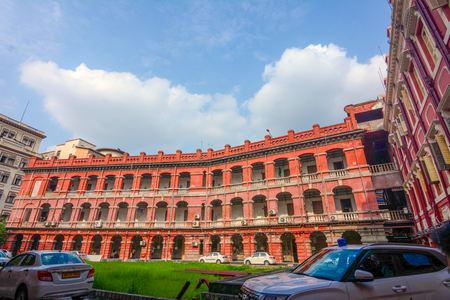
Color choices in West Bengal have often mirrored political transitions, with red symbolizing the Left Front and blue-and-white representing the Trinamool Congress. Mamata Banerjee’s preference for blue as a symbol of limitless possibilities is reflected in her attire and the state’s imagery.
Over the past five decades, political changes have been vividly depicted through colors across the state, from government buildings to rally tents. The iconic red of the Left Front era gave way to blue-and-white under the Trinamool Congress, marking a significant shift in governance.
The transition from the red Writers’ Building to the blue-and-white Nabanna symbolized a change in power dynamics. While the Writers’ Building, a colonial icon, served as the nerve center of governance, the shift to Nabanna represented a new era under Mamata Banerjee’s leadership.
Speculations are rife about the potential return of the secretariat to the Writers’ Building, with restoration work reportedly underway. The renaming of historic landmarks and the shift in political symbolism reflect the evolving narrative of West Bengal’s governance.
The saturation of red under the Left’s rule gave way to a new political palette of blue-and-white, signifying a fresh chapter in the state’s history. As the new cabinet members prepare to take oath, West Bengal’s political landscape continues to evolve, marked by symbolic color changes.
