


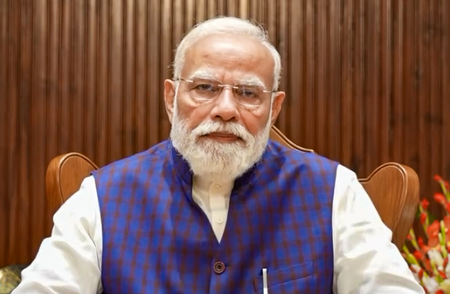
Prime Minister Narendra Modi highlighted the significance of homoeopathy in India’s healthcare system on World Homoeopathy Day. He shared an article by Ayush Minister Prataprao Jadhav emphasizing how homoeopathy has become an integral part of India’s diverse health and wellness framework, offering a comprehensive and patient-focused approach.
The Prime Minister mentioned that homoeopathy, known for its strong community ties and sustainable practices, can contribute to realizing the vision of a “Viksit Bharat.” Jadhav also pointed out that the unwavering faith of Indians in homoeopathy is evident from the thousands of patients who seek solace in this system daily for their health issues.
Furthermore, the government highlighted the increasing global acceptance of homoeopathy, especially in community healthcare and public health initiatives. Efforts have been directed towards expanding its accessibility through evidence-based methodologies and integrating it into national health programs.
Vaidya Rajesh Kotecha, Ayush Secretary, emphasized the harmony among traditional healing systems like Ayurveda, Siddha, Unani, and homoeopathy, all focusing on patient-centric and nature-based healing. He also stressed the effectiveness of homoeopathy in managing chronic and infectious diseases, including during the Covid-19 pandemic, with technological advancements like ‘Aura’ and ‘AYUSH ID’ enhancing healthcare delivery transparency and accessibility.
Homoeopathy, introduced in India in the early 19th century, has evolved into a significant element of the country’s alternative medicine landscape. India presently boasts approximately 3.45 lakh registered homoeopathy doctors, over 8,500 dispensaries, 277 educational institutions, and 34 research centers, as per government records.
