


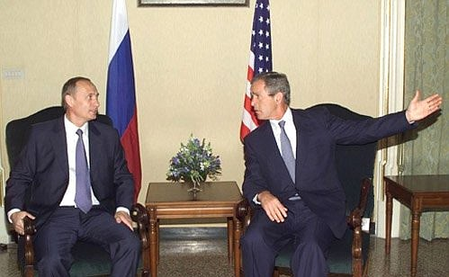
Pakistan has emerged as a significant nuclear proliferation worry in discussions between Russian President Vladimir Putin and former U.S. President George W. Bush. Transcripts reveal their unease over Pakistani uranium appearing in Iran’s nuclear program. The leaders expressed deep concerns about Islamabad’s control of its atomic assets.
During a meeting in 2005, Putin informed Bush that the uranium found in Iranian centrifuges originated from Pakistan. Bush agreed, labeling it a violation and expressing nervousness. Both leaders highlighted the risks of sensitive nuclear material spreading beyond state control.
Bush mentioned raising the issue with then-Pakistani President Pervez Musharraf, emphasizing U.S. pressure following revelations about Abdul Qadeer Khan’s activities. Despite some arrests, doubts lingered about the full extent of the A.Q. Khan network’s dismantling. Putin questioned why Pakistan faced less international pressure compared to other nuclear violators, describing it as a “junta with nuclear weapons.”
The leaders discussed reports of Pakistani involvement in foreign nuclear programs, with concerns about interactions with Iran’s enrichment efforts. While Pakistan was a key U.S. ally post-9/11, both Washington and Moscow viewed its nuclear management with suspicion. The documents underscore broader instability concerns related to Pakistan’s nuclear program and the potential for catastrophic leaks.
