


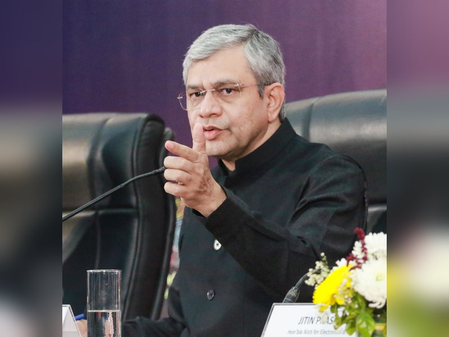
Rail fractures in Indian Railways have decreased by 92% and weld failures by 93%, as stated by Union Railway Minister Ashwini Vaishnaw. These advancements signify a significant enhancement in track safety. Vaishnaw highlighted that these changes are part of a broader safety-focused transformation initiated post-2014 under Prime Minister Narendra Modi’s directive.
Globally, railway safety is typically evaluated based on fatalities or accidents per billion passenger-kilometres, allowing for international comparisons. While the European Union reports around 0.09 fatalities per billion passenger-kilometres, India’s Consequential Accident Index has notably improved to 0.01, showcasing substantial progress.
Vaishnaw emphasized that India now holds a favorable position among major, intricate rail systems worldwide. The minister pointed to a substantial reduction in consequential train accidents from 135 in 2014–15 to just 16 in 2025–26, marking an impressive 89% decrease. Simultaneously, the accident index has dropped from 0.11 to 0.01, indicating a safer network despite significant expansions in train operations.
These achievements are particularly significant considering the complexity of India’s railway network, which accommodates various services such as passenger, freight, suburban, and express trains on shared tracks. Vaishnaw described the transformation as not merely incremental but structural, driven by consistent funding, technological advancements, and a steadfast policy commitment to safety.
India’s progress in railway safety should be seen not in immediate global benchmark comparisons but in the steady pace and commitment to reforms, positioning the country among leading international counterparts, according to Vaishnaw.
