


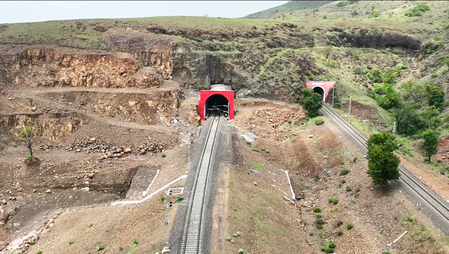
Under Prime Minister Narendra Modi’s leadership, Assam and the Northeast have become a key focus of India’s railway development, offering improved connectivity, safety, and economic prospects, according to railway officials. The region had faced challenges like limited connectivity and slow progress due to geographical obstacles and insufficient investments. However, significant changes are evident in increased budget allocations, with a fivefold rise from Rs 2,122 crore to Rs 11,486 crore annually between 2009 and 2026–27.
Railway projects worth over Rs 72,468 crore are currently in progress in Assam and the Northeast, including new line constructions, station upgrades, and safety measures. To enhance passenger experience, 60 stations are being revamped under the Amrit Bharat Station Scheme, with Haibargaon station already completed. Since 2014, about 1,900 kilometers of new railway lines have been laid in the region, surpassing Sri Lanka’s entire railway network.
Efforts to ensure safer travel include the construction of 502 rail flyovers and underpasses to reduce level crossings. The Kavach Automatic Train Protection System is being implemented, with approvals for 1,197 route kilometers and ongoing work on 235 kilometers. Modern train services like Vande Bharat Express and Amrit Bharat Express are now operational, offering faster connectivity between the Northeast and the rest of India.
Prime Minister Modi is set to inaugurate various railway projects and services for Assam on March 13–14, including the Furkating–Tinsukia Doubling Project, a POH Workshop at Bashbari, and electrification of several lines. Additionally, new train services will be launched, further strengthening connectivity and promoting trade, tourism, and social interactions in the region. Railway officials emphasize that this railway revolution signifies not just infrastructure development but also economic opportunities and national integration.
