


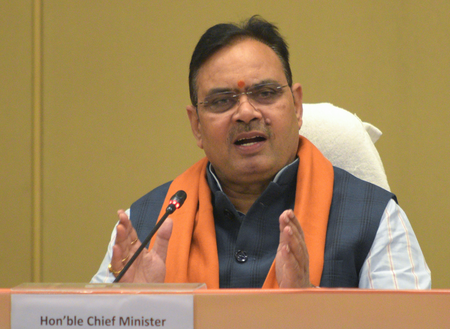
Rajasthan Chief Minister Bhajan Lal Sharma introduced the Rajasthan Aerospace and Defence Policy – 2026, aiming to enhance India’s strategic self-reliance. The policy envisions Rajasthan as a key manufacturing hub for various aerospace and defence products like aircraft, drones, missiles, and more, aligning with the Make in India initiative. To attract investments, the policy offers a range of incentives, including financial benefits, infrastructure support, and streamlined clearances.
The policy focuses on creating a competitive ecosystem by promoting manufacturing, research, testing, and services in the aerospace and defence sectors. It encourages the participation of various entities such as OEMs, MSMEs, start-ups, and skilling institutions, in line with national initiatives like Atmanirbhar Bharat and Make in India. Rajasthan’s industrial base, connectivity advantages, and access to key resources position it as an attractive destination for aerospace and defence investments.
The policy categorizes projects into large, mega, and ultra-mega segments based on investment sizes. It offers flexibility in choosing incentives like capital subsidies, investment grants, or turnover-linked benefits, with additional incentives for employment generation and specific industries. Key benefits include exemptions on various charges, subsidies on office space rentals, and long-term incentives like electricity duty exemptions.
To support industrial growth, the policy also includes provisions for green initiatives, skill development, training, and intellectual property creation. The statement highlighted India’s progress in the defence and aerospace sectors under Prime Minister Narendra Modi’s leadership, emphasizing domestic production growth and strategic autonomy. Notable achievements include the development of platforms like LCA Tejas and collaborations between global and domestic aerospace firms, fostering a robust supplier ecosystem.
