


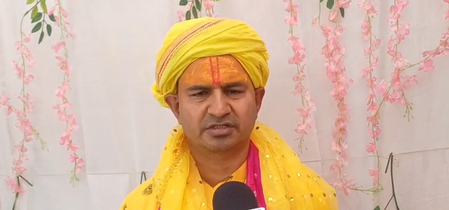
Religious and political tensions are escalating in Uttar Pradesh as the Holi festival approaches. Dinesh Sharma, also known as Falahari Maharaj, a key figure in the Shri Krishna Janmabhoomi and Shahi Eidgah Mosque dispute, has written to Chief Minister Yogi Adityanath requesting a ban on Muslims selling gulal during the festive season.
In his letter, Falahari Maharaj raised concerns about potential adulteration of colors by anti-Hindu elements, suggesting that harmful substances like glass shards or spit could be mixed in to disrespect the festival’s sanctity. He emphasized the need to keep Muslim traders away from businesses related to Hindu festivals to prevent any undesirable incidents and to respect religious sentiments.
Falahari Maharaj’s letter included requests for various actions, such as restricting Muslim vendors from setting up stalls near Shri Krishna Janmabhoomi and other significant temples. He also connected the issue to alleged ‘love jihad’ conspiracies, advocating that only Sanatani traders should be allowed to vend items associated with Hindu religious festivals.
Dinesh Sharma, known for his steadfastness, has been on an extended fast, surviving solely on fruits for the past four years. He has pledged to continue his fast until the mosque is completely removed from the Janmabhoomi complex. The call for an “economic boycott” has reignited discussions, with some supporting it for security and religious reasons, while others oppose it, citing concerns about social harmony and the region’s cultural diversity.
Holi, a significant Hindu festival celebrated widely in India and globally, holds special importance in the Braj region, linked closely to Lord Krishna’s life. The region, encompassing Mathura, Vrindavan, Govardhan, Gokul, Nandgaon, and Barsana, witnesses elaborate Holi rituals drawing numerous devotees. The ‘Lathmar Holi’ of Barsana is particularly renowned worldwide, standing out as a unique and vibrant celebration of the festival.
