


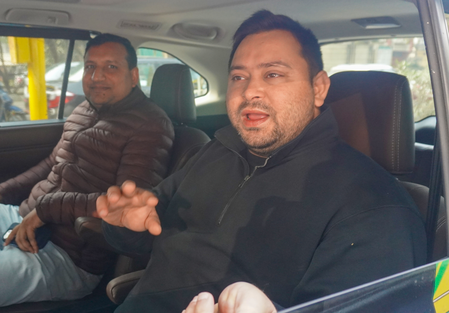
Bihar State Rashtriya Janata Dal (RJD) spokesperson Ejaz Ahmed expressed strong disapproval on Thursday regarding the alleged decrease in security arrangements for Leader of the Opposition Tejashwi Prasad Yadav. Ahmed accused the NDA government of deliberately trying to stifle the opposition’s voice through this action. He claimed that this reduction in security measures is a premeditated move to weaken the opposition even before it initiates any protests or demonstrations.
According to Ejaz Ahmed, the actions of the NDA government demonstrate an undemocratic attitude and indicate a scheme to undermine the opposition. He emphasized that diminishing Tejashwi Yadav’s security prior to any opposition activities reveals the government’s anxiety and discomfort. Ahmed further alleged that Tejashwi Yadav’s consistent efforts in holding the government accountable on critical public issues have unsettled ruling party officials.
Ejaz Ahmed highlighted that the government’s unease stems from Tejashwi Yadav’s scrutiny of matters such as employment, development, women’s safety, crime, and homicides in Bihar. He asserted that Tejashwi Yadav, known for advocating for the people’s interests, will persist in voicing concerns for the public good. Additionally, the RJD spokesperson linked the reported security downgrade to the current political tensions surrounding the NEET aspirant death case in Patna, suggesting that the government is attempting to divert public attention.
The spokesperson questioned the fairness of reducing the security of the Leader of the Opposition while providing enhanced security to various NDA leaders. He specifically pointed out the allocation of ‘Z’ category security to several BJP leaders and ministers, including Nitin Nabin, Mangal Pandey, Sanjay Saraogi, and Rajiv Ranjan Singh alias Lalan Singh. This category entails a significant deployment of commandos and police personnel for protection. Meanwhile, Tejashwi Yadav and Union Minister Giriraj Singh have been placed under the ‘Y+’ category security.
Officials clarified that the adjustments in security protocols were made following a security audit and an evaluation of the existing threat perception.
