


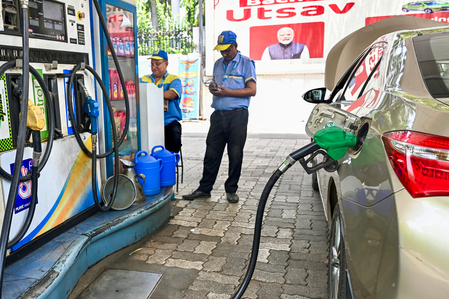
The special additional excise duty (SAED) reduction on petrol and diesel in March 2026 led to a financial impact of around Rs 30,000 crore for the central exchequer in the current fiscal year. The increased cost due to higher crude oil prices was not transferred to consumers; instead, it was absorbed by the exchequer. Amid disruptions in the Strait of Hormuz, the SAED cut brought down petrol excise to three rupees per liter and eliminated diesel excise.
The Congress has highlighted that petrol was priced at approximately Rs 71 per liter in May 2014, contrasting it with the current price of around Rs 98 per liter. This difference is presented as evidence of overtaxation. Sources indicate that the 2014 price was not the actual cost of producing a liter of petrol but was influenced by the issuance of oil bonds worth about Rs 1.34 lakh crore to oil marketing companies between 2005 and 2010 by the UPA government.
The price quoted by the Congress from 2014 was essentially a deferred tax liability on future consumers. The present government under Prime Minister Narendra Modi has been redeeming these oil bonds, with significant amounts paid in recent fiscal years. The mechanism employed by the current government to manage price fluctuations differs from the past approach, as highlighted by sources.
When crude oil prices surged in 2022 and 2026, the central excise duty on petrol and diesel was promptly reduced. This reduction was immediate, transparent, and visible at fuel stations within a day. The exchequer willingly accepted the revenue loss without resorting to issuing bonds or deferring obligations, ensuring that future taxpayers are not burdened with repayment commitments.
