


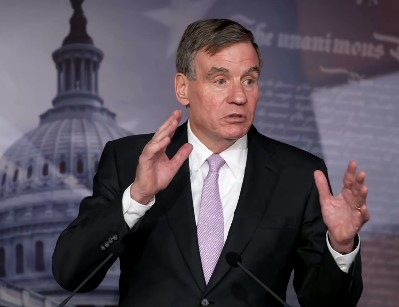
Senior Democratic Senator Mark Warner raised concerns about the strategic effectiveness of President Donald Trump’s recent agreement with Iran. Warner highlighted that the deal failed to address critical issues such as Tehran’s ballistic missile program, regional proxy networks, and future nuclear activities. He emphasized that the agreement provided Iran with significant economic relief without resolving key security concerns outlined by the administration.
Warner, who serves as the Co-Chair of the Senate India Caucus and Vice Chair of the Senate Select Committee on Intelligence, expressed disappointment over the agreement’s shortcomings. He noted that Iran appeared to have emerged from the conflict in a stronger position than anticipated, having successfully navigated challenges posed by the United States and Israel.
The senator criticized the agreement for not imposing restrictions on Iran’s development of nuclear weapons, stating that Tehran’s public stance on this issue had remained unchanged for decades. Warner also pointed out the absence of any mention of Iran’s ballistic missile capabilities, a major point of contention for the Trump administration.
Additionally, Warner questioned the agreement’s handling of Iran-backed groups operating in the Middle East, such as Hezbollah and the Houthis in Yemen. He expressed concerns that the deal could inadvertently empower Iran by lifting sanctions on its oil exports, potentially providing the regime with substantial financial resources.
Warner highlighted the agreement’s failure to address the core issue of preventing Iran from acquiring nuclear weapons. He also voiced apprehension that the agreement might reduce external pressure on Iran’s leadership, potentially limiting support for internal dissent within the country.
