


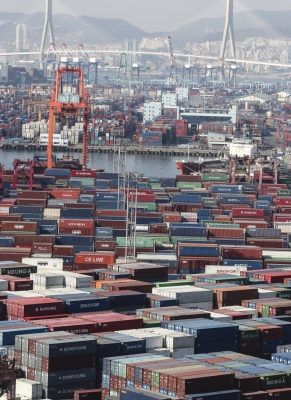
The Korea Development Institute (KDI) reported that the South Korean economy is experiencing a moderate increase in production, driven by enhanced consumption. Industrial output in December rose by 1.5 percent compared to the previous month, while retail sales saw a 0.9 percent increase, rebounding from a decline in November.
The service sector notably recorded a 3.7 percent growth in production across various areas, indicating a widespread recovery. Consumption is gradually improving due to rising incomes and interest rate cuts, with strong consumer sentiment supporting this trend.
Despite the positive growth, facility investment declined by 3.6 percent, primarily impacted by a 16.1 percent drop in transport equipment investments, including ships and aircraft. Construction investment also weakened, leading to a significant output decrease in the sector.
The KDI highlighted that while investment levels remained low, exports, particularly in semiconductors, showed modest growth. Although export volumes have slightly decreased, the surge in semiconductor prices has contributed to a sharp rise in overall export value. The institute also pointed out external uncertainties, such as potential U.S. tariff hikes and oil price fluctuations, posing risks to the South Korean economy.
U.S. President Donald Trump recently threatened to increase tariffs on South Korea, citing delays in passing a special investment bill related to a trade deal. In January, South Korea’s consumer prices rose by 2 percent year-on-year, the slowest pace in five months, partly due to stable petroleum prices, according to government data.
