


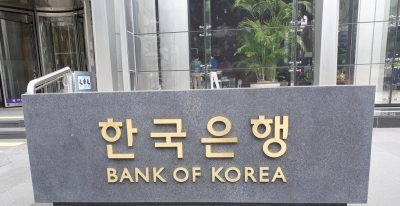
South Koreans’ overseas stock investments surged to an all-time high in 2025, nearly tripling from the previous year and reaching a level comparable to the country’s annual current account surplus, as per central bank data. Residents’ combined overseas equity investments totaled US$114.35 billion last year, a significant increase from $42.16 billion in 2024, setting a new record that surpassed the previous high of $68.53 billion in 2021. Different investor types contributed to this growth, with asset managers, securities firms, and insurers leading at $42.1 billion, followed by the National Pension Service (NPS) and other public institutions at $40.7 billion, and individual investors at $31.4 billion.
The Bank of Korea official noted that when considering retail investors’ overseas exchange-traded fund (ETF) investments facilitated by asset managers, individuals’ total direct and indirect overseas equity investment in 2025 likely exceeded that of the NPS and other public institutions. This significant rise in overseas stock investment has been identified as a major factor influencing the weakening of the local currency, as it drove up the demand for U.S. dollars despite the enhanced dollar supply resulting from the current account surplus. South Korea achieved its largest-ever annual current account surplus of $123.05 billion in 2025, supported by robust exports amid high semiconductor demand.
In 2025, the country also saw a record surplus in the primary income account, which includes foreign workers’ wages, dividend payments from abroad, and interest income. The dividend income surplus rose by 11 percent year-on-year to a record $20.19 billion, while the interest income surplus decreased by 4.95 percent to $9.98 billion, resulting in an investment income surplus of $30.17 billion last year. The BOK official highlighted that the increased overseas securities investment by local investors seemed to counterbalance a significant portion of the positive impact of the current account surplus on economic fundamentals.
The Korean won experienced notable fluctuations, hovering around 1,450 won per dollar for months and dropping to a multiyear low of around 1,480 won per dollar late last year. This decline was influenced by the overall strength of the U.S. dollar, geopolitical uncertainties, and substantial overseas securities investments by local investors. In response to the heightened currency volatility, authorities issued stern verbal cautions and implemented various policy measures, leading to a recovery in the currency to above the 1,430 won level.
