


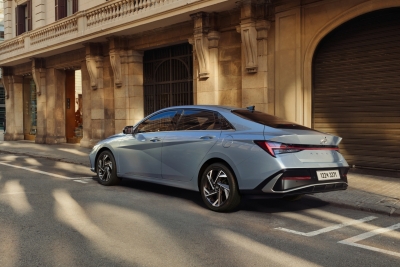
South Korea experienced a 20.8% decline in auto exports in February compared to the previous year, attributed to a reduction in working days for the month. The total value of automobile exports amounted to US$4.8 billion during this period, as per data from the Ministry of Trade, Industry, and Resources. Notably, the export value of hybrid cars saw a significant increase of 23.5% to $1.21 billion, while exports of electric vehicles (EVs) and hydrogen-powered cars decreased by 8.2% to $670 million.
The Ministry highlighted that the total exports of eco-friendly vehicles, encompassing EVs, hydrogen-fueled cars, and hybrids, reached a record high of $4.5 billion for the first two months of the year. In terms of export destinations, shipments to the United States and the European Union saw declines of 29.4% and 20%, respectively, while exports to Latin America surged by 21.7% compared to the previous year. Domestically, vehicle sales in South Korea totaled 123,275 units in February, marking a 7.2% decrease from the same period last year.
Meanwhile, South Korean stock markets witnessed a significant uptick, with shares trading over 3.5% higher on Wednesday morning. This increase was primarily driven by notable gains in leading tech companies such as Samsung Electronics and SK hynix. The benchmark Korea Composite Stock Price Index (KOSPI) surged by 3.62% to 5,844.75 points by 11:20 a.m. Hyundai Motor saw a rise of 2.97%, while its affiliate Kia recorded a 3.71% increase. Additionally, Hyundai Motor’s auto parts-making subsidiary, Hyundai Mobis, experienced a 3.64% growth.
SK Square, an AI investment firm, observed a substantial increase of 6.13%, and Doosan Enerbility, a power plant manufacturer, expanded by 2.78%.
