


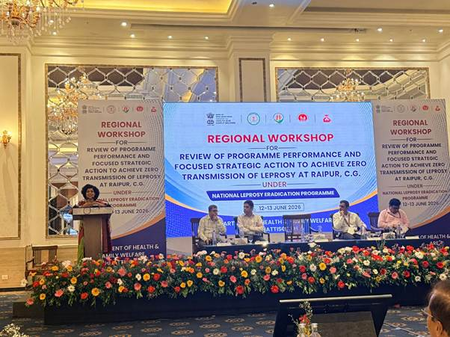
Stressing the importance of tailored strategies for each state to achieve a leprosy-free India, Additional Secretary of Health and Family Welfare, Aradhana Patnaik, emphasized the necessity for focused interventions to halt transmission in hotspot areas. India successfully eliminated leprosy as a public health issue nationwide in 2005; however, transmission persists in certain endemic districts and hotspots, requiring intensified efforts to break the chain.
Patnaik, addressing the Regional Workshop on Review of Programme Performance and Focused Strategic Action for Achieving Zero Transmission of Leprosy in Nava Raipur, highlighted that Maharashtra, Chhattisgarh, Jharkhand, Odisha, and Madhya Pradesh collectively contribute to half of India’s leprosy burden. These states also have numerous districts with prevalence rates exceeding 1 case per 10,000 population, underscoring the need for early detection and treatment through Leprosy Case Detection Campaigns.
Emphasizing the significance of prompt treatment, Patnaik called for enhanced contact tracing and expanded coverage of Post-Exposure Prophylaxis (PEP) using Single-Dose Rifampicin (SDR) among healthy contacts of index cases, especially in vulnerable populations. She encouraged states to intensify contact screening and PEP coverage, crucial steps in curbing disease transmission and preventing new infections.
While acknowledging the progress made, Patnaik highlighted the ongoing challenge of sustaining achievements and ramping up efforts in remaining endemic areas. She stressed the importance of accountability, timely decision-making, and effective program implementation, urging states to monitor progress regularly, identify obstacles, and take corrective actions to maintain momentum towards zero transmission.
Advocating for capacity building and leveraging existing platforms like Community-Based Assessment Checklists (CBAC) and National Health Mission frameworks, Patnaik guided State and District Leprosy Officers on optimizing available resources. She urged all participating states to continue their drive towards achieving zero transmission of leprosy.
