


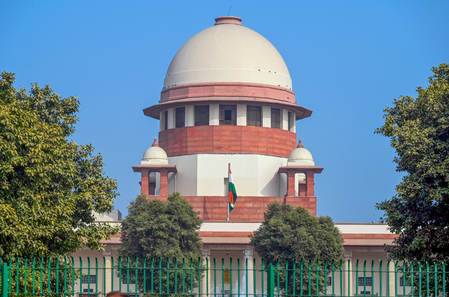
The Supreme Court rejected a petition challenging the Economic Weaker Sections (EWS) criteria for admissions in private medical colleges. The plea argued that the Rs 8 lakh income limit for EWS candidates loses significance when these colleges charge high tuition fees. The court upheld a Rajasthan High Court decision that dismissed the petitioner’s claim, emphasizing the financial autonomy of private institutions.
The Bench pointed out the difference between government and private educational bodies, noting that private colleges operate on a self-financing basis. While government colleges receive state grants, private institutions are self-sustaining. The court clarified that private colleges can charge regular tuition fees within the regulatory framework, even though capitation fees are prohibited. It suggested that scholarships could assist EWS candidates facing financial constraints due to high fees.
The petitioner, an EWS candidate from Rajasthan, had challenged the high tuition fees ranging from Rs 18.90 lakh to Rs 25 lakh per year in private medical colleges. The plea contended that such fees for EWS candidates contradicted the purpose of the 10% reservation introduced by the Constitution (103rd Amendment) Act, 2019. However, the Rajasthan High Court had ruled that EWS reservation does not entitle students to discounted fees in private colleges without specific statutory provisions.
