
Close Menu
  • Indian Festivals 2026
  • Movie & OTT Releases This Week
  • News
  • Entertainment
  • NRI Life
  • Research
  • Advertise with us
Facebook X (Twitter) Instagram YouTube
  • Download Indian Community App
  • Advertise Here
Facebook X (Twitter) Instagram
Indian CommunityIndian Community
Trending
  • Krishnavataram Part 1: The Heart Review – A Divine Love Story That Captivates the Soul
  • Jetlee (2026) Review: Satya Steals the Sky in This Turbulent But Fun Telugu Action-Comedy
  • Glory (2026) Review: A Riveting Sports Drama That Packs a Powerful Punch
  • Undekhi Season 4 Review: Darker, Deeper, and More Gripping Than Ever
  • Sapne Vs Everyone Season 2 Review: A Raw, Riveting Tale of Dreams, Ambition & Survival
  • KD: The Devil 2026 Review: Dhruva Sarja’s Underworld Epic Is a Bold, Ambitious Saga
  • Patriot (2026) Movie Review: Mammootty and Mohanlal’s Legendary Reunion Delivers a Gripping Surveillance Thriller
  • Kara Movie Review: Dhanush Delivers a Gripping Slow-Burn Thriller You Cannot Miss
  • Indian Festivals 2026
  • News
    • National
    • International
    • Entertainment
    • Achievements
    • Scam Alerts
    • Business
    • Health & Medicine
    • Science & Technology
    • Sports
  • Entertainment
  • Latest Movie Releases
    • Latest OTT Releases
  • NRI Life
  • India & Culture
  • Health & Wellness
  • Research
Indian CommunityIndian Community
Home » News » National
National

Supreme Court Expresses Concerns Over Judicial Intervention in Religious Matters

Indian Community Editorial TeamBy Indian Community Editorial TeamMay 7, 20262 Mins ReadNo Comments Add us to Google Preferred Sources
Supreme Court Expresses Concerns Over Judicial Intervention in Religious Matters
Share
Facebook Twitter LinkedIn Pinterest Email

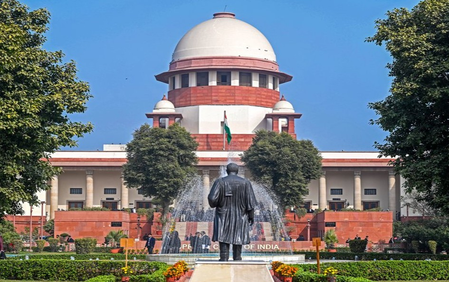
The Supreme Court, led by Chief Justice Surya Kant, raised worries about excessive judicial involvement in religious affairs, emphasizing that constant challenges to religious customs in courts could disrupt India’s societal fabric. The ongoing Sabarimala reference case involves crucial constitutional issues surrounding religious freedom and judicial oversight of religious practices. Justice B. V. Nagarathna cautioned against the routine acceptance of challenges to religious traditions, highlighting the deep-rooted connection between religion and Indian society.

The Constitution Bench acknowledged the broader implications of its ruling, recognizing that decisions in such matters could impact the civilization as a whole, not just individual disputes. Justice M. M. Sundresh echoed concerns, warning that unchecked judicial scrutiny of religious disputes might lead to the destabilization of religions. The court heard arguments challenging the authority of the religious head of the Dawoodi Bohra community to excommunicate members, citing instances of alleged arbitrary excommunications resulting in social exclusion and violation of fundamental rights.

Senior advocate Raju Ramachandran, representing the Central Board of Dawoodi Bohra Community, argued against arbitrary excommunications, emphasizing that actions conflicting with constitutional values should not be tolerated in a civilized society governed by the Constitution. He pointed out the far-reaching impacts of excommunication on individuals’ social, secular, and religious lives, affecting aspects like marriage, employment, and community participation. The Constitution Bench questioned the extent to which courts could intervene in internal disputes within religious denominations, with Justice Ahsanuddin Amanullah cautioning against diluting protections under Article 26 by examining religious matters for proportionality.

The Bench also addressed the issue of female genital mutilation (FGM) within the Dawoodi Bohra community, with senior advocate Siddharth Luthra arguing against the practice, citing violations of bodily integrity, dignity, and legal protections. Justice Amanullah expressed reservations over comparing FGM with male circumcision, emphasizing the differences between the two practices. The court deliberated on the distinction between male circumcision and genital cutting involving the clitoris, with Justice Joymalya Bagchi underscoring the dissimilarities. The nine-judge Bench, including Justices Aravind Kumar, A.G. Masih, Prasanna B. Varale, and R. Mahadevan, will continue hearing the case in the upcoming week.

A.G. Masih Ahsanuddin Amanullah Aravind Kumar B.V. Nagarathna Central Board of Dawoodi Bohra Community Chief Justice of India Constitution Bench Dawoodi Bohra India Joymalya Bagchi M.M. Sundresh Prasanna B. Varale R. Mahadevan Raju Ramachandran Sabarimala Siddharth Luthra Supreme Court Surya Kant
Add us to Google Preferred Sources
Indian Community Editorial Team

The Indian Community Editorial Team curates, verifies, and publishes stories that matter to Indians worldwide. From culture and community to business and innovation, our mission is to spotlight voices, ideas, and events that bring our global community closer together. Have news or a story to share? Submit it to us at [email protected].

Related Posts

India-EU and India-UK Free Trade Agreements: What They Really Mean for Indian Immigration

Canada PR for Indians 2026: 4 Critical Steps to Secure Permanent Residency Through Express Entry

H-1B Visa Interview Appointments for Indians Pushed to 2027: What You Need to Know Now

Add A Comment

Uttar Pradesh Chief Minister Yogi Adityanath Distributes Appointment Letters to 481 Candidates

May 7, 2026

AJUP President Condemns Killing of BJP Leader’s Assistant in West Bengal

May 7, 2026

Punjab Minister Reviews Canal Relining Project for Public Safety

May 7, 2026

Police Arrest 10 Individuals for Illegal Opium Cultivation in Jammu and Kashmir

May 7, 2026
  • Facebook
  • Twitter
  • Pinterest
  • Instagram
About Us
  • About Us
  • Contact Us
  • Terms of Service
Corporate
  • Download Indian Community App
  • Advertise Here
Facebook X (Twitter) Instagram
  • About Us
  • Contact Us
  • Terms of Service
© 2026 Designed by CreativeMerchants.

Type above and press Enter to search. Press Esc to cancel.