


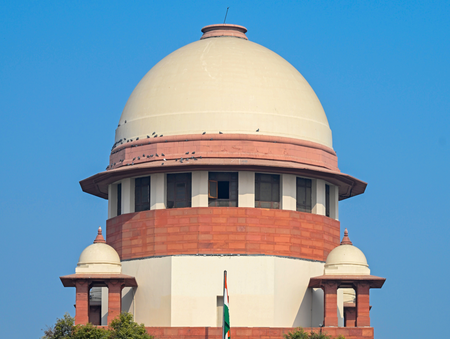
The Supreme Court ruled that amounts received by accident victims through medical insurance policies cannot be subtracted from compensation awarded under the Motor Vehicles Act. The bench dismissed an appeal challenging a Bombay High Court ruling that stated reimbursement from a Mediclaim policy should not be deducted when calculating motor accident compensation. The court emphasized that Mediclaim benefits, derived from paid premiums, should not diminish the statutory right to “just compensation” under the MVA.
The apex court clarified that Mediclaim benefits and MVA compensation are distinct. While one is contractual based on premiums paid, the other is a statutory entitlement following a motor accident. The court highlighted the issue of conflicting judicial opinions on claimants receiving compensation under both categories without double benefits. Rejecting the notion of duplication, the court emphasized the independent nature of Mediclaim policies and statutory compensation.
The Supreme Court underscored that Mediclaim policies are individual contractual agreements aimed at preparing for unforeseen medical expenses. It cautioned against depriving claimants of insurance benefits by denying compensation under the MVA due to Mediclaim reimbursements. The court explained that the principle against “double benefit” applies only when two payments compensate for the same loss from the same legal source.
Referring to earlier judgments, the court reiterated that benefits like insurance proceeds should not be deducted unless directly linked to the accident compensation claim. Expressing concern over conflicting High Court judgments on Mediclaim deductions, the court emphasized the need for consistency in legal precedents. The matter has been referred back to the Bombay High Court for a fresh decision in line with the Supreme Court’s ruling.
