


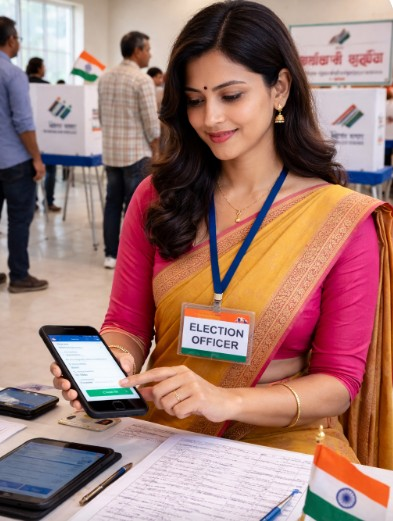
Tamil Nadu’s electoral process is experiencing a significant shift towards digital technologies, decreasing reliance on paper during elections. The Election Commission’s recent data reveals a substantial decrease in the use of A4 sheets, from 41 lakh in 2011 and 2016 to 8.73 lakh in 2021, attributed to mobile applications facilitating real-time data entry. This transition has led to improved efficiency and accuracy, with digital tools streamlining operations and reducing manual paperwork at polling stations.
Fresh data from the Election Commission highlights the scale of this shift. The use of A4 sheets, once a staple of polling documentation, has witnessed a steep decline over successive elections. From around 41 lakh sheets used in both the 2011 and 2016 Assembly polls, consumption dropped dramatically to 8.73 lakh sheets in 2021. This reduction is largely attributed to the introduction of mobile applications that enable real-time data entry and transmission.
Poll officials now rely on digital uploads for recording polling percentages, voter turnout, and counting results, significantly reducing the need for manual paperwork at polling stations. Officials note that the transition has improved both efficiency and accuracy.
“Digital tools have minimised duplication of work and reduced delays in data compilation. What earlier required multiple layers of paper-based reporting can now be completed instantly through mobile platforms,” an Election Department source said.
Traditionally, each polling station required between 60 and 70 A4 sheets for recording voter data, polling figures, and other documentation. These requirements have significantly reduced as digital platforms now handle data entry, storage, and transmission more efficiently.
Election authorities note that nearly 22 types of stationery items are typically used during polling and counting, with A4 sheets, ball pens, and packing materials forming the bulk of consumption. However, the shift to app-based reporting and result compilation has led to what officials describe as a fivefold reduction in paper usage since 2021.
The change has been particularly evident in the conduct of recent elections, where mobile applications enabled real-time updates of polling percentages and counting results, minimizing the need for physical paperwork and manual consolidation.
However, environmental experts point out that challenges remain beyond paper usage. They stress that election-related waste, including plastic materials and non-recyclable items, continues to pose ecological concerns. Activists advocate for a broader sustainability framework, urging authorities to adopt biodegradable materials and enforce stricter waste management practices to ensure that elections become fully eco-friendly in the years ahead.
