


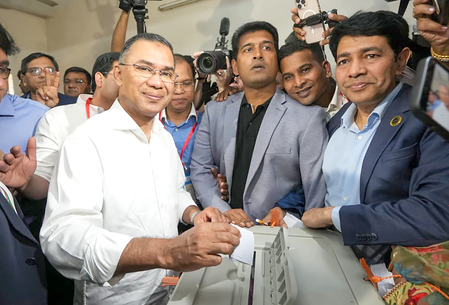
Tarique Rahman, the Bangladesh Nationalist Party (BNP) chairman, has returned to Bangladesh after 17 years of self-imposed exile in the UK. He is the son of former President Ziaur Rahman and ex-Prime Minister Khaleda Zia. Following his mother’s passing, Rahman emerged as a key contender for the prime ministerial position due to the Awami League’s inability to participate in elections.
Referred to as the “dark prince,” Tarique wielded significant influence during the BNP and Jamaat-e-Islami coalition rule from 2001 to 2006. Accused of corruption and running a parallel power center, he faced scrutiny from the Awami League government. The Awami League expressed concerns over the nation’s historical revisionism, highlighting the need to remember the dark period of institutional collapse during Tarique’s previous tenure.
Arrested in 2007 amid political turmoil, Tarique was later released and sought medical treatment in the UK. His return coincided with the overturning of court verdicts against him following the 2024 July uprising. Experts anticipate a more politically mature approach from Rahman, emphasizing potential efforts to mend ties with India while avoiding excessive Pakistani influence, drawing lessons from regional developments.
During the BNP’s previous rule, strained relations with India persisted over security issues and allegations of sheltering anti-India groups. With Tarique poised to lead Bangladesh after nearly 35 years without a male Prime Minister, challenges lie ahead in addressing unrest and combating rising Islamist extremism, particularly in the aftermath of the interim government led by Muhammad Yunus.
