


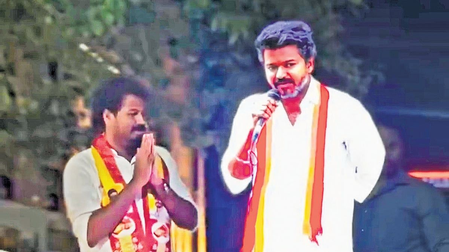
Technology is rapidly transforming political campaigns in Tamil Nadu, with the emergence of artificial intelligence-driven holograms as a new tool ahead of the Assembly elections. A recent campaign in Kumbakonam showcased how digital innovation is being used to overcome the absence of key campaigners and attract voter attention. At the heart of this shift is a holographic projection of actor and Tamilaga Vettri Kazhagam (TVK) President Vijay, which has gained widespread attention on social media.
The holographic projection, featured on a moving vehicle, presented a lifelike visual of Vijay engaging with voters, complete with synchronized speech and gestures that momentarily convinced onlookers of his physical presence. This initiative has generated significant interest within political circles, leading to a surge in inquiries from candidates of various parties. There are also requests to create holographic avatars of late political figures like M. Karunanidhi and J. Jayalalithaa, highlighting the emotional impact and symbolic significance such technology holds for voters.
The rising demand indicates a broader shift in campaign strategies, with digital engagement increasingly complementing traditional approaches. Even in states without imminent elections, such as Andhra Pradesh and Karnataka, political figures are exploring AI-powered tools to boost visibility and engage with voters. Companies offering these services have reported a surge in inquiries from candidates across party lines, with just days remaining until the Assembly polls.
While holographic campaigning is not entirely new, the current trend distinguishes itself through the integration of artificial intelligence. Improved lip-syncing, realistic movements, and enhanced portability have made these projections more immersive and adaptable, especially in rural areas. Political analysts view these innovations as a sign of advanced technology’s deeper penetration into grassroots politics.
The concept of a ‘virtual leader’ addressing crowds, even while on the move, has introduced a new element to campaign theatrics and voter interaction, particularly appealing to younger demographics. Behind the scenes, a small team of six, including young engineers, utilized 3D hologram fan display systems to achieve sharper and more dynamic visuals compared to traditional methods. Despite its impact, challenges persist, such as maintaining projection quality on moving vehicles and mitigating environmental disruptions, prompting ongoing refinements by technology companies.
With costs starting at approximately Rs 50,000 per day, holographic campaigning is gradually establishing itself as a futuristic and impactful addition to India’s evolving electoral strategies.
