


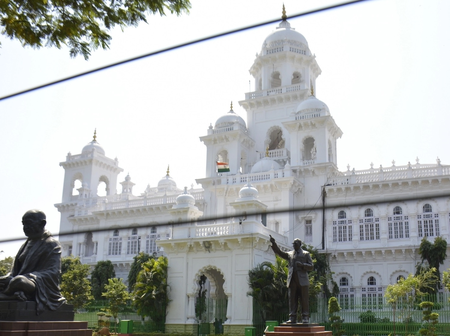
The Telangana Legislative Assembly approved a resolution urging the preservation of the Mahatma Gandhi National Rural Employment Guarantee Scheme (MGNREGS) and condemning the recently enacted Viksit Bharat Guarantee for Rozgar and Aajeevika Mission (Gramin) Act (VB G RAM G) for its negative impact on the rights of the underprivileged. Chief Minister A. Revanth Reddy presented the resolution, which received unanimous support through a voice vote. The resolution argues that the new law is detrimental to the poor, particularly women laborers, and goes against the principles of federalism.
The MGNREGS, initiated in 2005 under the UPA government, aims to provide employment opportunities to rural residents, ensuring financial stability for impoverished households. Envisioned to combat poverty, unemployment, migration, and gender wage gaps, the Act mandates offering at least 100 days of work annually to each rural family at a minimum wage. Notably, over the past two decades, the scheme has predominantly benefited marginalized groups, with 90% of beneficiaries in Telangana belonging to Scheduled Castes, Scheduled Tribes, and Backward Classes, of which 62% are women.
Chief Minister Reddy expressed concerns that the new legislation jeopardizes the job security of rural women and vulnerable populations reliant on the MGNREGS. By deviating from the original scheme’s objectives and eliminating demand-based work planning, the new law is viewed as a threat to the welfare of the impoverished. The resolution also criticizes the altered funding structure, shifting from full central funding to a 60:40 ratio, as an infringement on federal principles, burdening states financially.
The resolution further highlights objections to the removal of Mahatma Gandhi’s name from the scheme, emphasizing the symbolic significance of Gandhi’s legacy. It denounces the mandated 60-day break during the agricultural season as unjust to landless laborers, advocating for year-round employment opportunities. Additionally, concerns are raised regarding the exclusion of labor-intensive activities like land development in the new law, potentially impacting small farmers, Dalits, and tribal communities negatively.
