


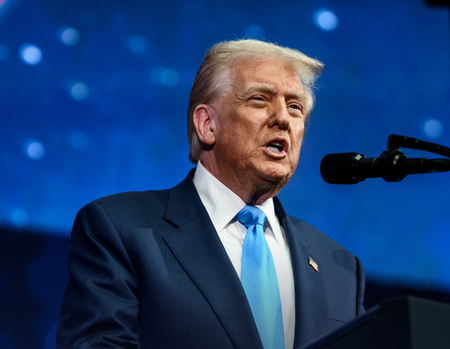
Sharpening his stance on Greenland, US President Donald Trump has cast doubt on NATO’s dependability, hinting at a link between security commitments to Europe and economic and strategic advantages. During a White House press briefing marking his one-year return to office, Trump refrained from disclosing the extent to which the US would go to safeguard its interests in Greenland, stating, “You’ll find out.”
When asked about the possibility of using force, Trump avoided specifics and emphasized economic tools such as tariffs, licensing, and other alternatives, which he described as the most effective and rapid measures. Trump mentioned having scheduled meetings on Greenland during his upcoming Davos trip, expressing optimism that things would turn out positively.
In addition to his focus on Greenland, Trump reiterated his criticism of NATO, asserting that he had bolstered the alliance by pressuring members to increase defense spending. He claimed that allies had agreed to raise spending to 5% of GDP from the previous 2% target, a feat he deemed improbable. Trump also questioned whether NATO would support the US in a crisis, emphasizing that the alliance’s strength is contingent on American involvement.
While acknowledging his role in enhancing NATO’s standing, Trump remained critical of its structure, arguing that the US shoulders a disproportionate burden. He credited his approach with compelling allies to contribute more financially and purchase more American goods. Trump dismissed the idea of attending a proposed G-7 emergency meeting in Paris, citing concerns about the invitation from French President Emmanuel Macron and preferring direct engagement with involved leaders.
Trump highlighted his amicable relationships with Macron and British Prime Minister Keir Starmer, acknowledging the challenges faced by both countries, particularly in immigration and energy sectors. He urged European leaders to reconsider their reliance on wind power and instead utilize domestic energy resources. Trump’s foreign policy strategy often intertwines security assurances with economic pressure, leveraging tariffs and trade negotiations with allies and adversaries.
Emphasizing the success of this approach in enriching and safeguarding the US, Trump attributed the country’s current prosperity to these pressure tactics. As competition intensifies in the Arctic and Europe, Trump’s statements indicate a continued alignment of US policy with alliances, territorial interests, and trade relationships.
