


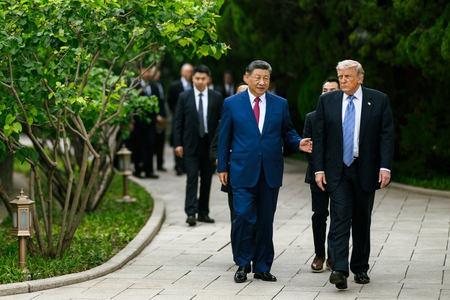
US President Donald Trump stated that Chinese President Xi Jinping had given him assurances that Beijing was not providing weapons to Iran. Trump, speaking at the White House ballroom construction site, emphasized the importance of diplomatic efforts to prevent Iran from acquiring nuclear weapons. He mentioned the strong personal relationship he had developed with Xi during their recent interactions.
Trump highlighted China’s interest in maintaining stability in the Middle East due to its reliance on energy resources from the region. He noted that China, like the US, desired open access to the Strait of Hormuz and other vital waterways. The President also discussed Iran’s historical use of strategic water passages for military purposes and the involvement of regional allies like Saudi Arabia, Qatar, and Israel in negotiations concerning Iran.
Trump claimed that Iran’s military capabilities had been significantly degraded, with a substantial portion of their missiles and naval and air forces reportedly destroyed. Despite acknowledging Iran’s remaining capacity for retaliation, Trump asserted that their ability to rebuild had been severely hampered by targeted strikes on their manufacturing facilities. He revealed that the US had considered military action but opted for diplomacy following advice from regional partners.
Emphasizing the threat of Iran developing nuclear weapons, Trump underscored the potential catastrophic consequences, particularly for Israel. He also highlighted the impact of prolonged conflicts in the region on global energy markets, pointing out the implications for oil supplies and prices. The Trump administration’s approach aimed to apply pressure on Iran while engaging in dialogue with key players such as China, a significant economic partner of Iran and a supporter of diplomatic solutions over unilateral sanctions.
