


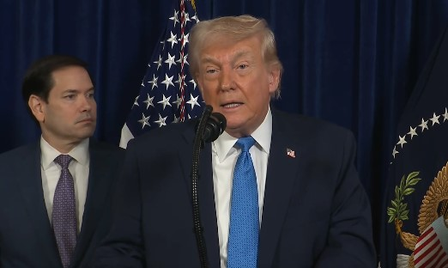
US President Donald Trump’s recent remarks about the US taking charge of the nation and American companies aiding in the restoration of Venezuela’s oil sector have sparked widespread discussions. Trump hinted at the possibility of escalating tariffs on Indian products if India continues purchasing Russian oil, a move that has already led to additional tariffs due to reciprocal trade actions. The criticism towards India for buying discounted Russian oil, despite similar practices by European nations, has drawn attention to the global oil trade dynamics.
The focus on oil emerges as a common thread connecting various incidents. Trump’s executive order in March instructed the identification of countries importing Venezuelan oil, potentially facing a 25% tariff on all goods imported into the US. Despite Venezuela’s significant oil reserves, its global supply contribution remains minimal, attributed to financial constraints and sanctions. The cost-intensive nature of oil extraction and refining in Venezuela raises questions about profitability for companies involved.
The potential shift in Venezuela’s oil export policies could impact major importers like China, which heavily relies on Venezuelan crude. While the US grants waivers to India for limited oil imports from Venezuela, the inability of Venezuela to redirect its crude to alternative markets sets it apart from Russia. The recent US actions targeting Venezuela, Russia, China, and India underscore the strategic importance of energy in shaping global relations and trade dynamics.
Washington’s use of sanctions and trade measures to influence energy markets reflects its efforts to redefine energy leverage worldwide. By targeting Venezuelan oil entities and signaling intentions to reshape the country’s oil sector, the US aims to influence heavy-crude flows globally. Indian oil firms face uncertainties regarding their dealings with Venezuela, depending on how US policies evolve and potential sanctions ease. The US approach towards China and India differs, focusing on diverse aspects like critical minerals, clean energy cooperation, and supply chain diversification.
