


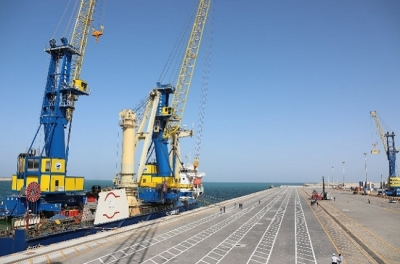
US President Donald Trump’s recent warning about potential tariffs for countries trading with Iran could have significant implications for India, particularly concerning operations at the Chabahar port. India, along with China, Turkey, the UAE, Pakistan, and Armenia, is among Iran’s key business partners. The proposed additional tariffs, in addition to existing duties, could create challenges for Chabahar port operations, which are crucial for India as a strategic counter to Pakistan’s Gwadar Port.
The Chabahar port is essential for India’s trade access to Afghanistan and Central Asia, allowing it to bypass Pakistan. Despite the risks posed by potential sanctions, India managed to secure a short exemption until April this year to continue its operations at the port. The port’s significance lies in its role in enhancing trade and connectivity for India in the region.
The extension of the exemption was viewed as a diplomatic victory for India amidst broader tensions involving US sanctions on Iran and Russia. However, the $500 million investment and the 10-year agreement to run the Shahid Beheshti terminal are now at risk of facing secondary sanctions, complicating trade routes to Afghanistan and Central Asia. The potential impact of these developments on India’s economic and geopolitical strategies in the region remains a concern.
Negotiations with Washington on sanctions and trade issues have allowed India some breathing room to continue its operations at the Chabahar port without immediate punitive measures. However, the looming threat of additional sanctions and tariffs could complicate India’s trade negotiations with the US. The current waiver, valid until April 2026, provides India with a limited timeframe to navigate these challenges and reinforce its regional ties and infrastructure investments crucial for its strategic interests.
