


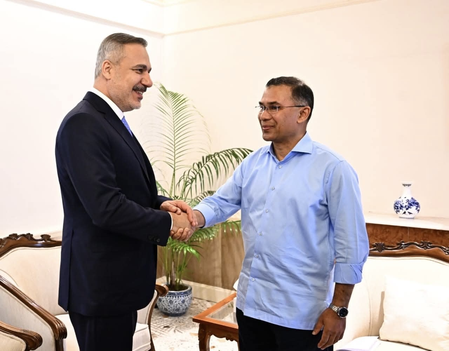
As Dhaka and Ankara strengthen their ties, concerns arise regarding Turkey’s stance towards Bangladesh’s political landscape in 2026. While Turkey engages with various political factions in Bangladesh, some suggest that its public statements and diplomatic efforts seem to favor Islamist groups, notably Jamaat-e-Islami, a report reveals.
Turkey’s historical relationship with Bangladesh has been complex, with instances such as not supporting Bangladesh during the 1971 Liberation War against Pakistan. Instead, Turkey backed Islamabad’s view that the conflict was an internal matter and emphasized Pakistan’s territorial integrity.
The delay in Turkey recognizing Bangladesh until 1974, post Pakistan’s acceptance of Bangladesh’s independence, was seen as a reflection of Turkey’s strategic priorities. Ankara’s longstanding ties with Pakistan during the Cold War era and within the Muslim world took precedence over supporting Bangladesh’s self-determination.
The report also highlights Jamaat’s opposition to Bangladesh’s independence in 1971, aligning itself with Pakistan during the Liberation War. Some of Jamaat’s leaders collaborated with the Pakistani military, leading to convictions for war crimes in Bangladeshi courts.
Turkey’s relationship with Bangladesh is influenced by historical events, notably the 1971 Liberation War, which remains a crucial part of Bangladesh’s national identity. The support Turkey showed to Pakistan during the war and its defense of convicted Jamaat leaders continue to be contentious issues shaping contemporary diplomacy.
While Bangladesh and Turkey have expanded cooperation in various sectors, both nations face the challenge of deepening practical collaboration while acknowledging historical realities that impact public sentiment. Building genuine friendship requires an honest and respectful confrontation of history.
