


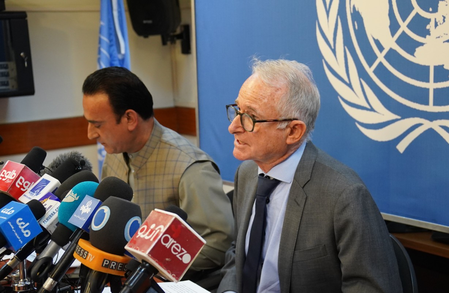
Richard Bennett, the United Nations Special Rapporteur on human rights in Afghanistan, has raised concerns about the severe impact of restrictions and funding cuts on Afghan women’s access to essential healthcare services. Bennett is set to present a report on women’s health rights at the United Nations Human Rights Council session in Geneva. He highlighted that Afghanistan’s health system, already fragile due to war and poverty, has been further strained by current restrictions, leading to closures of over 300 clinics and reduced staffing levels, especially among female healthcare workers.
The crisis, according to Bennett, stems from structural weaknesses in the healthcare system, restrictive Taliban policies, and cuts in international funding. The Taliban’s limitations on women, such as barring them from medical education and imposing travel restrictions, have created significant barriers to healthcare access. The report emphasizes the challenges faced by women in rural areas, particularly those with disabilities or without male guardians, in accessing healthcare services.
Bennett commended Afghan women and girls for their determination to pursue education, noting that education plays a crucial role in empowering individuals to understand and assert their rights. Since the Taliban’s takeover in 2021, concerns have been raised about the sustainability of Afghanistan’s health sector, especially with the ban on girls attending schools and universities.
Recent reports have highlighted the fragile economic conditions for Afghan women, with limited job opportunities and increasing household vulnerabilities. The economic strain is evident, with 75% of Afghans struggling to meet daily needs and 88% of female-headed households lacking minimum living requirements. Years of conflict, economic challenges, and reduced international aid have weakened Afghanistan’s economy, pushing many residents towards humanitarian aid and informal income sources for survival.
Moreover, restrictions on women’s employment and education have exacerbated income disparities, with only 7% of women working outside the home compared to 84% of men. This gender disparity in employment opportunities further contributes to economic challenges faced by Afghan families, leading to increased poverty and food insecurity in the country.
