


Reaffirming Prime Minister Narendra Modi’s commitment to integrating Jammu and Kashmir with the rest of India, the Union Budget 2026-27 has earmarked Rs 1,086 for enhancing railway infrastructure in the region. Union Railway Minister Ashwini Vaishnaw emphasized that rail connectivity will drive regional growth and stability, marking a significant shift post the abrogation of Article 370 in 2019.
The new focus on transportation signifies a transformative approach, replacing outdated methods in a region long plagued by inadequate transport options. Despite challenges posed by difficult terrain, harsh winters, and security concerns, the government views railway connectivity not as a luxury but as a fundamental requirement for economic progress and sustainable development.
The Udhampur-Srinagar-Baramulla Rail Link (USBRL) stands out as a crucial railway project in the region, spanning 272 km and overcoming decades-long delays due to various obstacles. Featuring over 900 bridges and numerous tunnels, including the iconic Chenab Rail Bridge, this project represents a remarkable engineering feat for India.
The USBRL not only sets engineering records but also establishes permanent access, reducing dependence on the Srinagar-Jammu highway. By enhancing travel reliability, accelerating cargo transport, and ensuring passenger safety, the railway network has already started benefiting local communities by improving connectivity to markets, schools, and employment opportunities.
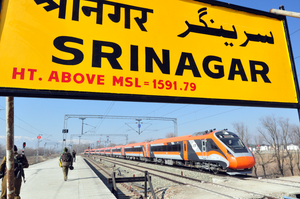
The introduction of the Vande Bharat Express on the Jammu-Srinagar route further underscores the practical value of rail services in Kashmir, especially during severe winter conditions that often disrupt road traffic. With plans for additional railway lines to border and hilly areas, the region anticipates improved access to essential services, educational institutions, tourism sites, and employment prospects.
