


The Union government revealed intentions to enhance astrophysics and astronomy initiatives, along with upgrading telescope facilities across India. Finance Minister Nirmala Sitharaman disclosed these plans during her presentation of the ninth consecutive Union Budget in Parliament. The proposed investments aim to broaden India’s observational capabilities, support advanced research endeavors, and motivate the upcoming generation of scientists.
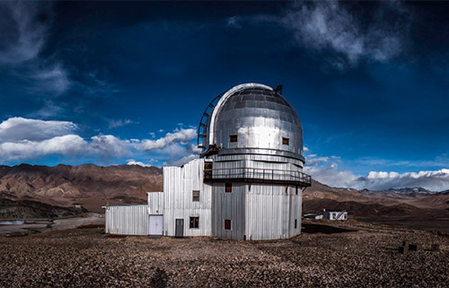
Four telescope infrastructure facilities have been earmarked for establishment or enhancement to foster astrophysics and astronomy, as stated by the Finance Minister. These investments under Budget 2026 are geared towards expanding India’s observational capacities, backing cutting-edge scientific investigations, and nurturing scientific talent for the future. The identified facilities include the National Large Solar Telescope (NLST), the National Large Optical Infrared Telescope (NLOT), the Himalayan Chandra Telescope, and the COSMOS 2 Planetarium.
The upgrade of NLST is set to propel space weather research and solar atmospheric studies forward. Positioned in the Himalayan high-altitude desert, the NLST site provides exceptional atmospheric conditions for solar coronagraphy, focusing on high-resolution observations of the Sun. Meanwhile, the NLOT, a proposed 10-12 meter class ground-based facility, is designed to be India’s primary large-aperture optical and infrared observatory.
Situated in Ladakh’s Hanle at the high-altitude Indian Astronomical Observatory, the NLOT forms part of a broader initiative to enhance India’s astronomical capabilities alongside NLST. This enhancement will bolster India’s capacity to observe faint and distant celestial entities such as exoplanets, nebulae, and galaxies. Furthermore, the upgrade of the Himalayan Chandra Telescope in Ladakh aims to enhance its sensitivity and instrumentation for more precise observations under exceptional atmospheric conditions.
The development of the COSMOS 2 Planetarium is envisioned as a contemporary public outreach and educational hub to popularize astronomy and space science among students. This new initiative is anticipated to solidify India’s standing as a prominent global player in space research and exploration.
