


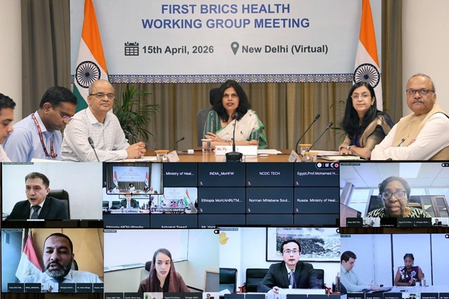
The Union Health and Family Welfare recently organized the first Health Working Group (HWG) meeting under the BRICS framework for 2026 in New Delhi. This meeting brought together senior health officials and delegates from nine member nations to enhance cooperation on various public health priorities. The meeting, chaired by Union Health Secretary Punya Salila Srivastava, included participation from countries like Brazil, Russia, China, South Africa, Egypt, Ethiopia, the United Arab Emirates, and Indonesia.
India, as the BRICS Chair for 2026, has centered its presidency theme on ‘Building for Resilience, Innovation, Cooperation, and Sustainability’. This theme aligns with Prime Minister Narendra Modi’s people-centric approach outlined at the 2025 Rio Summit. It sets the stage for India’s health diplomacy goals for the year, focusing on inclusive, evidence-based, and scalable health cooperation across different national contexts.
During the meeting, Health Secretary Srivastava highlighted the progress made in previous BRICS Health Working Group meetings in addressing critical health challenges. These challenges include communicable and non-communicable diseases, health system strengthening, and enhancing access to affordable medicines. She also introduced two new priority areas under India’s chairship: a BRICS Mission for Healthy Lifestyles and the Promotion of Mental Health and Wellness. These proposals garnered significant support from member delegations.
The meeting discussed nine priority areas under the BRICS Health Working Group for 2026, such as the BRICS TB Research Network, collaboration among BRICS medical products regulatory authorities, and a BRICS Integrated Early Warning System for mass infectious diseases. The agenda covered a wide spectrum from scientific research and regulatory alignment to social determinants of health and digital infrastructure. Member countries reiterated their commitment to universal health coverage, equitable access to health technologies, local production of medicines and vaccines, and enhancing pandemic preparedness infrastructure as common objectives.
