


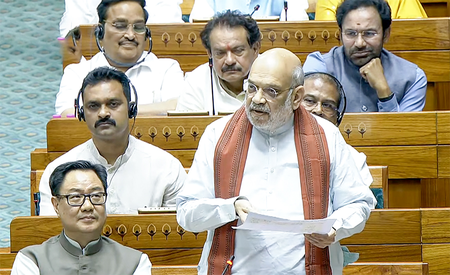
Union Home Minister Amit Shah clarified that the southern states’ representation in the Lok Sabha will not decrease after the delimitation exercise but will actually increase. He emphasized that the Cabinet has decided to include caste count in the census. Responding to concerns raised by the Opposition regarding the impact of delimitation on states like Tamil Nadu and Telangana, Minister Shah provided a state-by-state explanation of the Bill.
Karnataka, Andhra Pradesh, Telangana, Kerala, and Tamil Nadu are expected to see a rise in their representation as per Minister Shah. The introduction of the Constitution (One Hundred and Thirty-First Amendment) Bill and the Delimitation Bill 2026 by Union Law Minister Arjun Ram Meghwal was accompanied by Minister Shah’s proposal to introduce the Union Territories Laws (Amendment) Bill, 2026.
During the debate on the three Bills, Minister Shah criticized the spread of misinformation and assured that the implementation of the Bills will not harm the states. He specifically addressed Tamil Nadu, stating that their current 39 MPs in the Lok Sabha will increase to around 59 after a 50% increase in seats. Similarly, Kerala’s representation is set to grow from 20 to 30 MPs.
According to Minister Shah’s data, Karnataka’s MPs will increase from 28 to 42, Andhra Pradesh’s from 25 to 38, and Telangana’s from 17 to 26 after the proposed 50% increase in Lok Sabha seats. He highlighted that the total number of MPs from Southern states in the current Lok Sabha is 129, representing nearly 24% of the House. The increase to 195 MPs post-delimitation will further boost their representation.
Minister Shah also confirmed the government’s decision to conduct a caste-based census and addressed queries about the decision to increase Lok Sabha strength to 850. He explained that the actual figure will be 816 and assured that elections until 2029 will continue using the existing system.
