


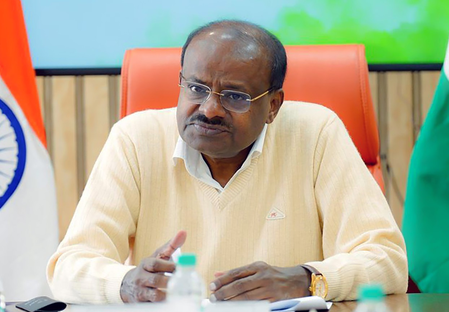
Union Minister for Heavy Industries and Steel, H.D. Kumaraswamy, emphasized the significant announcements in the current financial year’s Union Budget aimed at enhancing the production and utilization of rare earth metals and supporting electric vehicles. The Budget places a strong focus on promoting EV batteries and electric mobility, continuing the customs duty exemption for battery manufacturing. Moreover, the extension of the exemption from Basic Customs Duty (BCD) on capital goods for manufacturing lithium-ion cells aims to bolster battery production and the EV supply chain.
An exemption from Basic Customs Duty has also been provided for the import of sodium antimonate used in solar glass manufacturing, with the goal of strengthening domestic solar production and offering backing to EV and renewable energy supply chains. The Budget has elevated the plan to extract and utilize rare earth minerals by announcing the establishment of rare earth corridors in Odisha, Kerala, Andhra Pradesh, and Tamil Nadu. These corridors are part of the ongoing Rs 7,280-crore project approved by the Union Cabinet under the Rare Earth Permanent Magnet (REPM) scheme.
In the realm of the Ministry of Steel, the Budget underscores sustainability in the steel sector and the drive to reduce carbon emissions to net zero. A proposed investment of Rs 20,000 crore has been allocated for carbon mitigation initiatives in sectors emitting carbon like steel, cement, and refineries. This investment aims to facilitate the adoption of advanced technologies to curtail carbon emissions, ensuring that India’s key industries maintain global competitiveness and environmental responsibility.
Reacting to the Union Budget, V. Sunil Kumar, BJP MLA and former minister in Karnataka, commended the Budget presented by Union Finance Minister Nirmala Sitharaman for fostering the overall development of the country, including Karnataka. The Budget’s emphasis on IT innovation, tourism expansion, inland water connectivity, high-speed rail, MSMEs, and the services sector lays a robust foundation for a future-ready Karnataka. By prioritizing various economic aspects, the Budget encourages the growth of tourism, agriculture, horticulture, MSMEs, infrastructure, and economic corridors.
