


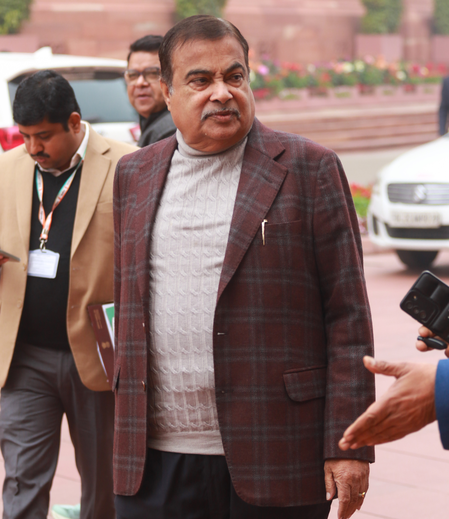
Union Road Transport & Highways Minister Nitin Gadkari praised the emphasis on infrastructure development in the Union Budget 2026-27, highlighting its significance in fostering resilience, opportunities, and global competitiveness. He noted that these initiatives underscore a vision where infrastructure plays a pivotal role in India’s journey towards achieving a developed nation status by 2047.
Finance Minister Nirmala Sitharaman’s budget speech for 2026-27 showcased a strong commitment to infrastructure growth, emphasizing sustained public investments to propel economic expansion and ensure balanced regional advancement.
Gadkari, in a post on X, lauded the budget for placing infrastructure at the core of India’s progress towards Viksit Bharat 2047. He commended the budget’s focus on enhancing connectivity, boosting manufacturing capabilities, and promoting regional equilibrium, which he believes will drive the creation of top-notch, future-ready infrastructure.
The Minister highlighted key developments in the connectivity sector, including the introduction of 20 new National Waterways to enhance logistics and inter-regional movement, as well as the establishment of seven high-speed railway corridors to improve passenger and freight transport efficiency.
Gadkari also mentioned the establishment of dedicated Rare Earth Corridors in Odisha, Kerala, Andhra Pradesh, and Tamil Nadu to bolster critical mineral supply chains and support strategic industries. Additionally, he emphasized the budget’s initiatives aimed at scaling up domestic manufacturing in vital sectors and regions, such as biopharma, semiconductor manufacturing, electronics components, chemical parks, and the revival of legacy industrial clusters.
The budget was hailed by the Union Minister for positioning urban infrastructure as a key driver of growth. He underscored the government’s commitment to prioritizing infrastructure development in Tier II and Tier III cities with populations exceeding 5 lakh, recognizing their emergence as new economic hubs, innovation centers, and employment generators.
Gadkari concluded by emphasizing the overarching vision of infrastructure as not just physical assets but as a catalyst for resilience, opportunities, and global competitiveness.
