


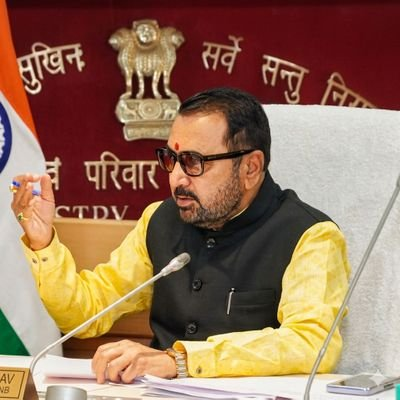
Union Minister of State for Ayush and Minister of State for Health and Family Welfare Prataprao Jadhav praised the Delhi government’s conservation plan for the Delhi Ridge ecosystem. He lauded the initiative as a crucial move towards environmental conservation and sustainable urban development. Jadhav highlighted the proposed plantation of over 70 lakh indigenous and climate-resilient trees, development of more than 70 water bodies, and the notification of nearly 6,000 hectares of land as forest area.
The Union Minister welcomed the idea of replacing invasive species with indigenous ones, such as Peepal, Banyan, Neem, Arjun, and Jamun. He emphasized that this shift would help in turning the Ridge into the “lungs of Delhi,” fostering a healthier and greener urban environment for future generations. Jadhav also suggested integrating environmental conservation with public health and traditional medicine systems by allocating at least 20% of the plantation for medicinal plant species.
Jadhav proposed the development of at least two forests as dedicated Medicinal Forests if allocating 20% for medicinal plants in all eight forests is not feasible. He believed that these medicinal forests would not only provide a sustainable source of quality raw material for the Ayush sector but also promote biodiversity conservation, strengthen ecological restoration efforts, and boost eco-tourism in the National Capital Region.
The Union Minister shared an indicative list of medicinal plant species suitable for plantation in Delhi’s agro-climatic conditions with Chief Minister Rekha Gupta. The list included Ashwagandha, Giloy, Tulsi, Brahmi, Shatavari, Amla, Arjun, Ashok, Neem, Bel, and Jamun, among others. Jadhav reiterated the Ministry of Ayush’s commitment to promoting medicinal plants and sustainable healthcare ecosystems. He expressed confidence that the proposed initiative would set an example for integrating urban afforestation with India’s traditional systems of medicine and environmental stewardship.
