


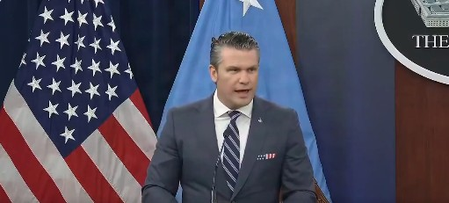
The US emphasized its authority over maritime activities in the Strait of Hormuz, rejecting Iran’s claims of dominance in the region. Defence Secretary Pete Hegseth stated that Iran lacks the naval capability to control shipping routes, labeling its threats against commercial vessels as criminal acts. He highlighted that targeting civilian ships would constitute piracy and terrorism rather than control.
At a Pentagon briefing, Hegseth, along with Air Force General Dan Caine and Admiral Bradley Cooper, reiterated the US stance on managing traffic flows through the strait. The US Navy, utilizing a small fraction of its global fleet, enforces a naval blockade targeting Iran’s ports and coastline to limit Tehran’s economic and military capacities post recent combat operations. Military officials confirmed that the blockade applies to all vessels transiting to or from Iranian ports, irrespective of nationality.
The operation involves over 10,000 personnel, including sailors, Marines, and airmen, supported by multiple ships and aircraft to uphold the blockade. US forces have issued warnings to vessels approaching restricted areas, resulting in several ships altering their course to comply. While 13 vessels have turned back, no confrontations requiring boarding or seizure have occurred. Despite the ceasefire, US officials remain prepared for potential escalation and criticized allies for not actively contributing to maritime security efforts.
