


The United States launched a series of strikes lasting seven hours on numerous Iranian military sites close to the Strait of Hormuz and along Iran’s coast. The US Central Command confirmed that fighter jets, drones, and naval vessels targeted Iranian missile and drone locations, naval capabilities, and coastal defense systems. This operation aimed to diminish Iran’s capacity to pose threats to commercial shipping and civilian crews, particularly in the strategically vital Strait of Hormuz.
The strikes represent a heightened level of US military engagement with Iran in the region surrounding the Strait of Hormuz, a critical passage for global energy supplies and international maritime trade. Concurrently, US forces reinstated a naval blockade against vessels traveling to and from Iranian ports and coastal regions. This blockade commenced at 4 p.m. ET, six hours before the conclusion of the strike mission, as announced by CENTCOM.
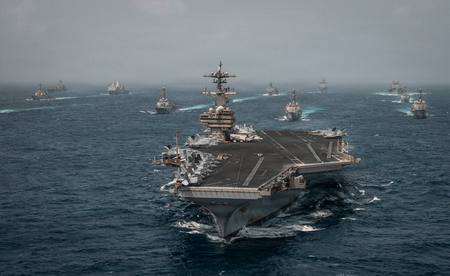
CENTCOM disclosed that more than 20 US Navy warships and numerous military aircraft were actively deployed in the Middle East region. Emphasizing readiness, lethality, and vigilance, the command reiterated the commitment of American forces to safeguarding regional stability and security. Admiral Brad Cooper, the CENTCOM Commander, underscored that the recent military actions were responses to Iranian assaults on commercial ships and neighboring Gulf nations.
Cooper condemned Iran for targeting civilians through attacks on commercial vessels, resulting in casualties among civilian crew members. He also highlighted Iran’s missile and drone launches towards neighboring Gulf countries as provocative actions endangering innocent lives. While specific strike locations were not disclosed by CENTCOM, the command refrained from providing details on casualties, damage assessments, or identifying the commercial ships and nationalities of affected crew members.
US forces, under the direction of the commander in chief, remain prepared to execute additional operations as deemed necessary to address ongoing security challenges in the region.
